Trekking & mountaineering
Llullaillaco Volcano, the guardian of the highest archaeological site on the planet
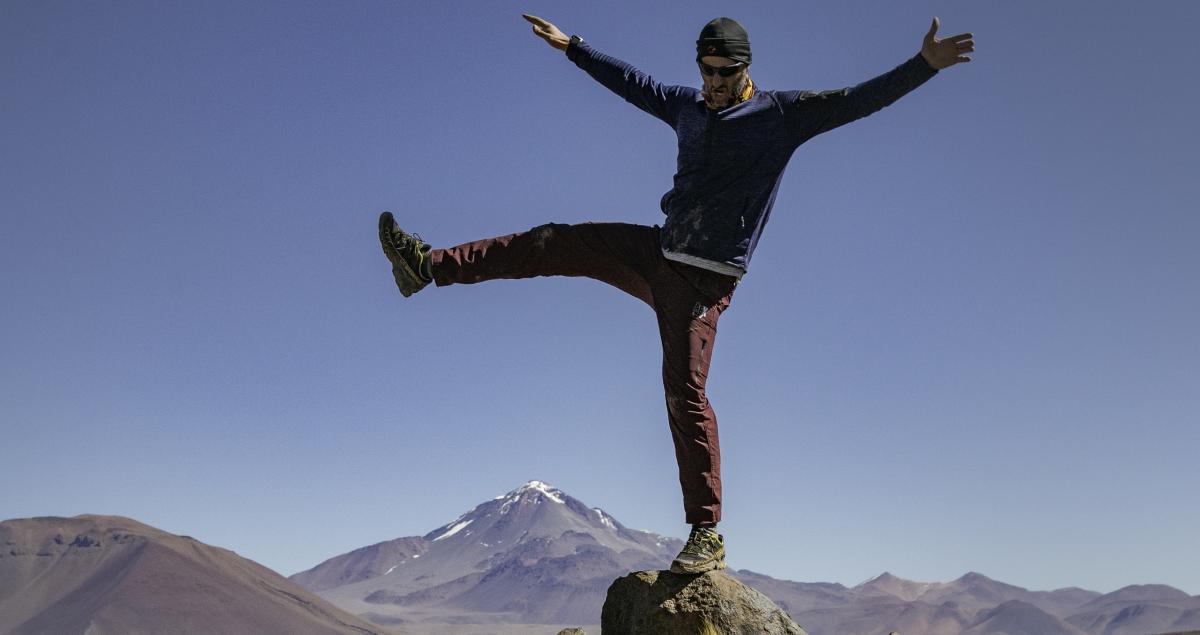
The journey toward this giant of the Puna is a supreme challenge for body and soul (o for body and spirit
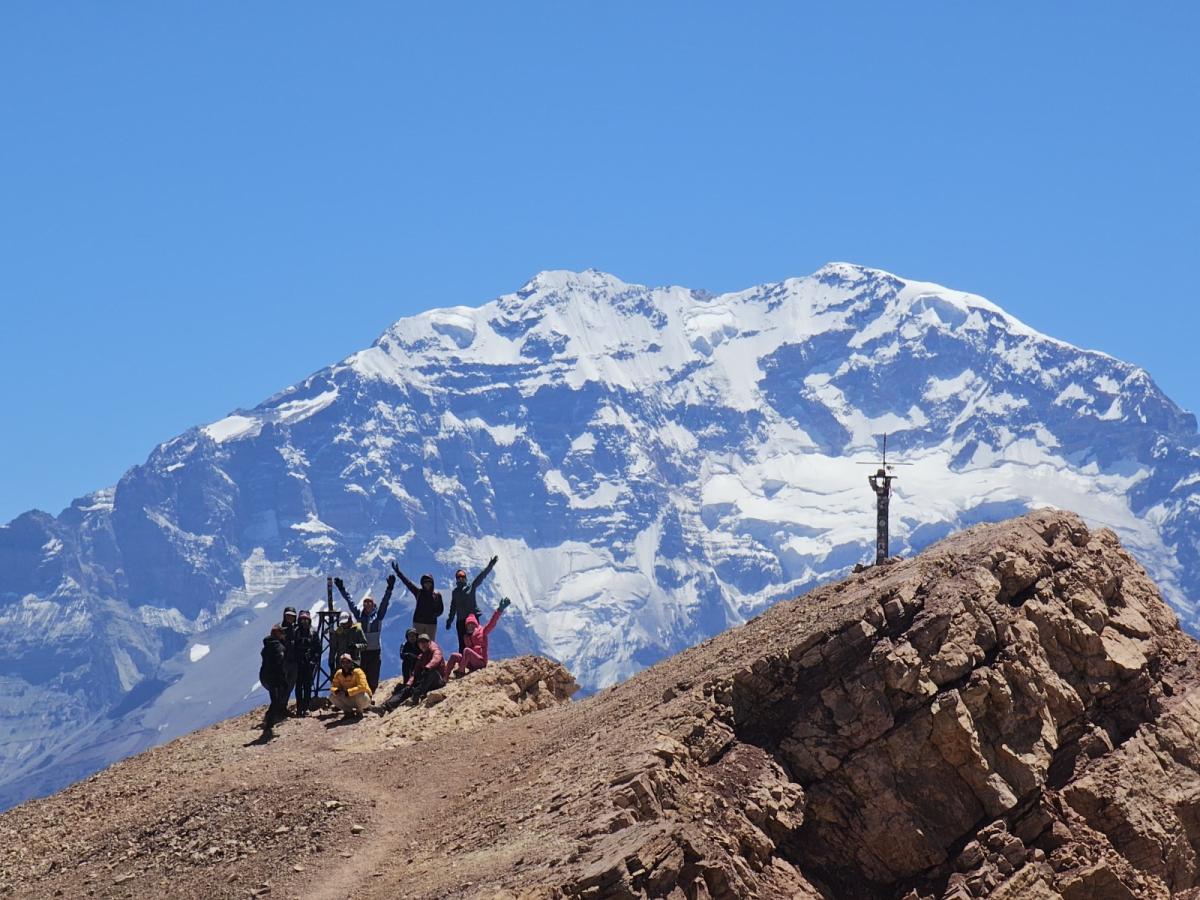
Trekking and ascent of one of the classic mountains of Argentina and Chile
At the foot of the majestic Maipo Volcano lies a lagoon that literally mirrors it, making the two equals in natural beauty.
The Laguna del Diamante Nature Reserve is located 200 km southwest of the city of Mendoza, within the San Carlos department. It was declared a reserve in 1994 and covers an area of 192,000 ha, protecting an important section of the main range crest in the Central Andes, which includes Maipo Volcano at 5323 m and the lagoon of the same name, located at 3300 m. Sighting herds of guanacos throughout the reserve is another of its major attractions.
This volcano has a typical triangular shape that is mirrored in the lagoon, forming the diamond shape its name refers to. It rises, imposing and isolated, part of a group of inactive volcanoes; its summit is located on the west side of the crater, from where it dominates the heights of the region.
This mountain is part of a varied group of 10 peaks and mountains scattered across Argentina, all under 6000 meters, that we have brought together so adventurous mountaineers can find a new challenge to take on. These are well-known mountains, and the idea was to rank them by the difficulty of their normal route, with at least one representative from each region and from each altitude band in the thousands.
1- Cerro Tres Picos, Buenos Aires. 1239 m
2- Cerro Champaquí, Córdoba. 2884 m
3- Cerro Penitentes, Mendoza. 4350 m
4- Lanín Volcano, Neuquén. 3776 m
5- Mount Tronador, Argentine Peak, Río Negro. 3230 m
6- Cerro El Manchao, Catamarca. 4560 m
7- Domuyo Volcano, Neuquén. 4709 m
8- Maipo Volcano, Mendoza. 5323 m
9- Nevado de Chañi, Jujuy. 5896 m
10- Cerro El Sosneado, Mendoza. 5169 m
Day 1: Meeting in the city of Mendoza. Introduction of guides and last-minute shopping. Transfer from the city of Mendoza to the Laguna del Diamante Nature Reserve, approximately 4 hours. Check-in at Puesto Alvarado, run by the Mendoza Province park rangers. Setting up camp on the west shore of the lagoon, dinner and overnight.
Day 2: Rest at Laguna Diamante (3300 m). Acclimatization and hydration day; we'll do some hikes around the area so our bodies acclimatize to 3300 m. If the lead guide sees that the group is in good shape, we'll carry personal and group gear up to camp 1.
Day 3: Climb to camp 1 (3800 m). During the approach to camp 1 we'll pass very close to Nicanor Volcano, located at the foot of Maipo Volcano. Setting up camp, dinner and overnight.
Day 4: Climb to camp 2 (4200 m). Setting up camp. Check of the technical gear to be used on summit attempt day. We'll have an early dinner to take advantage of rest hours ahead of the big summit attempt day. Dinner and overnight.
Day 5: Summit attempt (5323 m). An intense day; we'll be on the move from very early in an attempt to reach the volcano's summit. Once on the summit we'll take photos and enjoy the beautiful scenery the nature reserve offers. We'll then begin the descent to camp 2. Dinner and overnight.
Day 6: Descent to Laguna del Diamante (3300 m). On the last day we'll wake up very early to break camp and start the descent to Laguna del Diamante. We'll then head back to the city of Mendoza. Check-out at Puesto Alvarado. We'll arrive in the city of Mendoza in the evening. End of the expedition and our services.
A demanding high-altitude mountain expedition.
In high-mountain tents, for 2 or 3 people.

On all our expeditions we provide full-board meal service.
It is necessary to complete the personal/medical form to note dietary restrictions.

It has no technical difficulty, but it is physically demanding with some altitude exposure. It's best to have some prior experience in trekking or another ascent.
For any mountain activity you need some prior physical preparation, or be physically active.
It's important to have some prior experience in different treks. We recommend being in good physical condition, and knowing that this is a backpacking-style trip, with overnight stays in rustic camps. Summit day is intense.
We sleep at rustic camps using high-mountain tents. They are comfortable and usually sleep 2 or 3 people depending on the tent's model and brand.
Tents are included in the service.
Even though it is summer, in mountain and/or remote areas temperatures tend to drop at night.
Stops happen at a frequency and pace depending on the intensity.
There are stops for lunch, afternoon snack, and rest.
From 13 years of age.
For a woman, a range of 13 to 15 kilos; for a man, 15 to 20 kilos.
Not on this expedition. Each person carries their own backpack with personal gear and shared group gear (tents, food, etc.).
On all our expeditions we provide meals on a FULL BOARD basis.
Trail lunches (cold meals): Milanesa and tomato sandwiches, cold cut sandwiches, snack platters, salads, appetizers, etc.
Dinners: Vegetable, bacon and chorizo stew, chicken and vegetable casseroles, pasta with various sauces or stew, grilled meat (Chivito), chow fan, chicken and rice casserole....
Breakfasts and afternoon snacks: Tea, coffee, cappuccino, mate cocido, mate, powdered milk; bread, cookies, jam, honey, dulce de leche; cereal, fruit.
It is necessary to complete the personal/medical form to note if anyone has any dietary restrictions.
Scale 0–100%. Argentina Extrema graded difficulty system. How it is measured


We will reply by email or WhatsApp with full details, payment options and how to confirm.
Trekking & mountaineering
The journey toward this giant of the Puna is a supreme challenge for body and soul (o for body and spirit
Trekking & mountaineering
Details of Argentinas most outstanding ascents on low to mid-high mountain peaks and volcanoes
Trekking & mountaineering
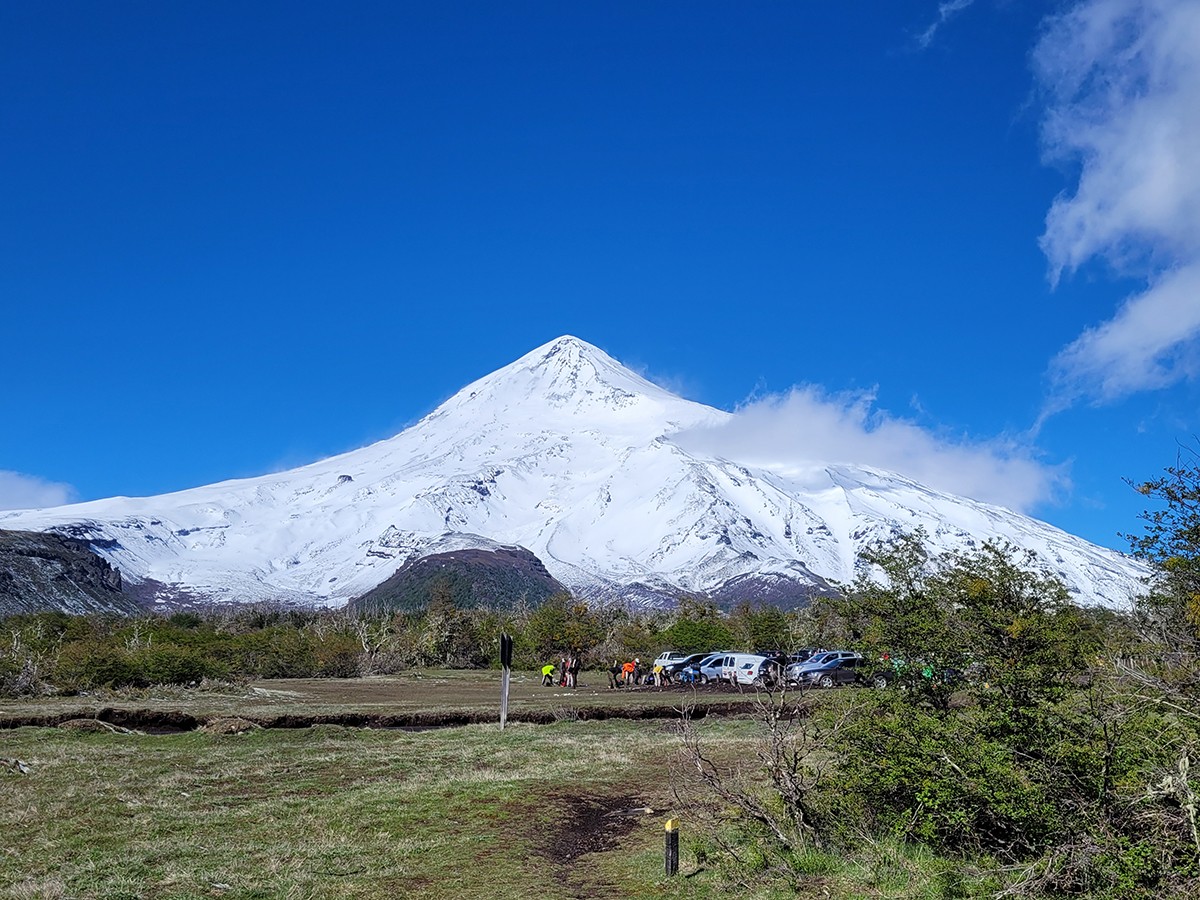
Geography, legend, history, Mapuche influence and how to climb it
Summit climbs · Patagonia
Summit climbs · Cuyo