Trekking & mountaineering
10 Classic Mountains in Argentina - under 6000 meters
Details of Argentinas most outstanding ascents on low to mid-high mountain peaks and volcanoes
A week to climb several volcanoes in Chilean Patagonia
Day 1: Meeting day in Zapala. Meet the guides, meet the group. Gear check. Free afternoon to explore. Night at a hotel (included)
Day 2: Transfer along Route 242 to Pino Hachado and crossing into Chile via the pass of the same name. From Pino Hachado to Malalcahuello (approx. 100 km). We settle into lodging in the village mentioned. Rest and overnight stay in cabins or a hostel.
Day 3: Day of ascent of Lonquimay Volcano. Drive to the base and climb the volcano. 9 hrs round trip. Return to lodging in Malalcahuello. Overnight stay.
Day 4: Transfer south via routes 919 and 925. We'll enter Conguillío National Park and stop at the base of Sierra Nevada Volcano, where we'll do the trek up to that volcano's viewpoints. We'll then visit Laguna Catren and Quililo + waterfalls, and finally head to the town of Melipeuco, where we'll spend the night in cabins or a hostel.
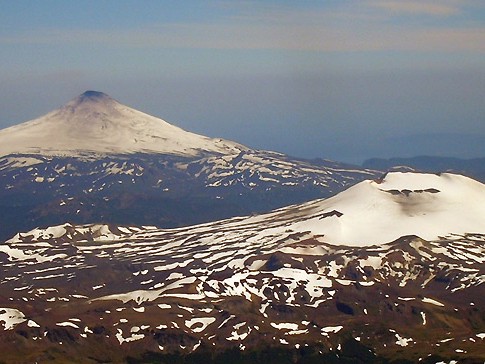
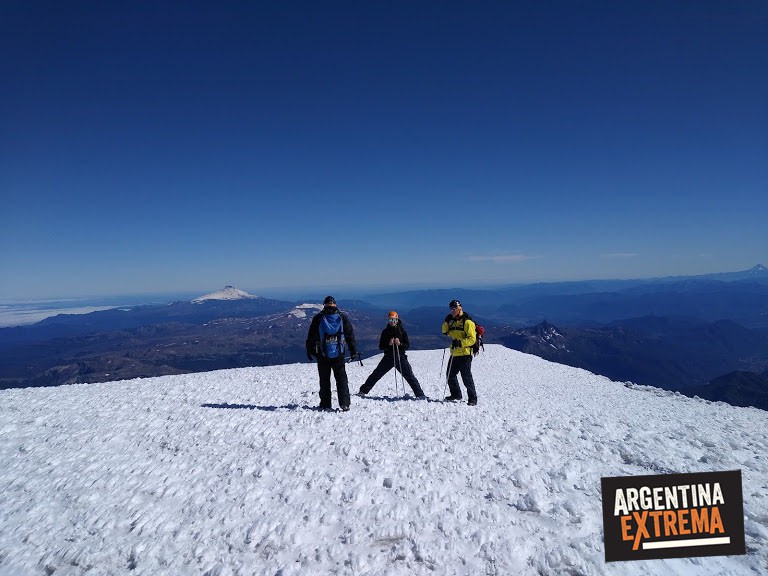
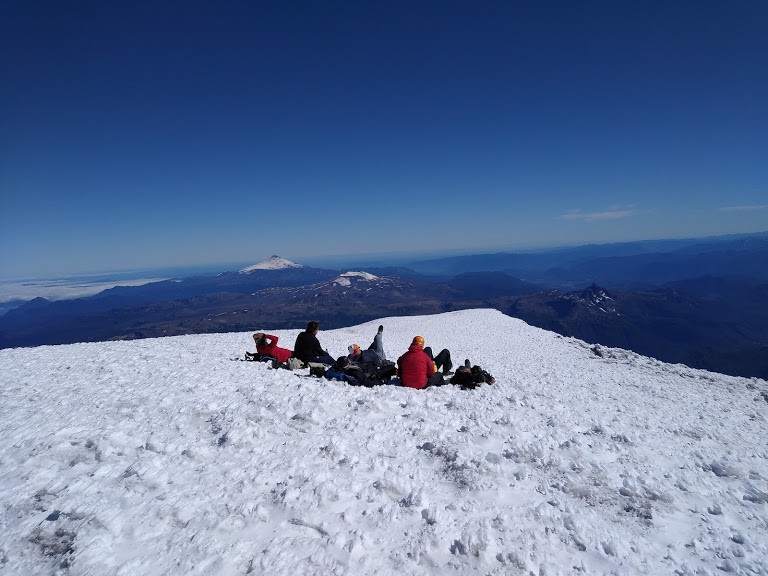
Day 5: Day of ascent of Llaima Volcano (3125 masl). Very early transfer to the base of the Araucarias Ski Center; about an hour and a half. 5 am start of the ascent. We set off toward the summit. First we'll pass through a flat area, then the climb will get progressively steeper. The view is indescribable, with sights all the way to the volcano's summit, as well as Lonquimay Volcano, Tolhuaca, Antuco and the surrounding area. Continuing on our route we'll climb up to the lava flow at 2200 masl, where after a two-hour walk across a flat stretch, we can see Laguna Quepe, Cerro Colorado and the imposing Villarrica Volcano. After reaching the summit, we head back down to the base. Transfer back to Melipeuco. Rest and overnight stay.
Day 6: Rest day with easy outings around Conguillío National Park: waterfalls, lagoons and hot springs. Another night in Melipeuco.
Day 7: Early, transfer to the base of Solipulli Volcano, ascent of the volcano (6 hrs round trip) to its summit. On the way back, transfer and crossing into Argentina via the Icalma pass to Villa Pehuenia. Final night at a hostel in Villa Pehuenia.
Day 8: Final transfer to Zapala / Neuquén. End of the trip
Dressing recommendations
An inner layer in contact with the skin, that "wicks" the moisture produced by sweat and carries it to the outside without holding it in the fabric, so we stay dry. A middle layer that provides thermal insulation, that isn't heavy or uncomfortable, so we stay warm. And an outer layer, waterproof-breathable, that protects us from the elements (rain, snow and wind).
The technical difficulty comes from 35-degree slopes requiring crampons; and the physical demand is significant.
Yes, the physical demand is significant. We include specific guidance throughout the year to help you prepare. If you're from Buenos Aires, you can join our training groups; if you're from elsewhere, we'll send you a training plan so you can train on your own.
It's important to have some previous experience with different treks. We recommend being in good physical shape. Summit day is intense.
Overnight stays are in cabins or hostels in Chile.
Even though it's summer, in mountain and/or wilderness areas temperatures tend to drop at night and at dawn (on the second day).
From age 13.
Approximately between 10 and 12 kilos.
No. Everyone has to climb carrying the weight in their own backpack, their personal gear. Porter service can be arranged, but you need to ask and book it in advance.
On all our expeditions we offer meals on a FULL BOARD basis.
Trail lunches (cold food): Breaded cutlet and tomato sandwiches, cold cut sandwiches, charcuterie boards, salads, savory pies, etc.
Dinners: Usually hot. Vegetable-bacon-chorizo colorado stews, chicken and vegetable casseroles, pasta with various sauces or stew, roasted beef (asado), chow fan (fried rice), chicken and rice casserole....
Breakfasts and afternoon snacks: Tea, coffee, cappuccino, mate cocido, mate, powdered milk; bread, crackers, jam, honey, dulce de leche; cereal, fruit.
It's necessary to fill out the personal/medical form to let us know if anyone doesn't eat certain types of food.
Scale 0–100%. Argentina Extrema graded difficulty system. How it is measured




We will reply by email or WhatsApp with full details, payment options and how to confirm.
Trekking & mountaineering
Details of Argentinas most outstanding ascents on low to mid-high mountain peaks and volcanoes
Other
Diary of an experience: Ascent of Cerro Tres Picos (Buenos Aires Province – 1,239 m.a.s.l.)
Summit climbs · Patagonia
from US$ 2.312
Summit climbs · Patagonia
from US$ 900
Summit climbs · Patagonia
from US$ 900


