September 23, 2026 · Leandro Scheurle
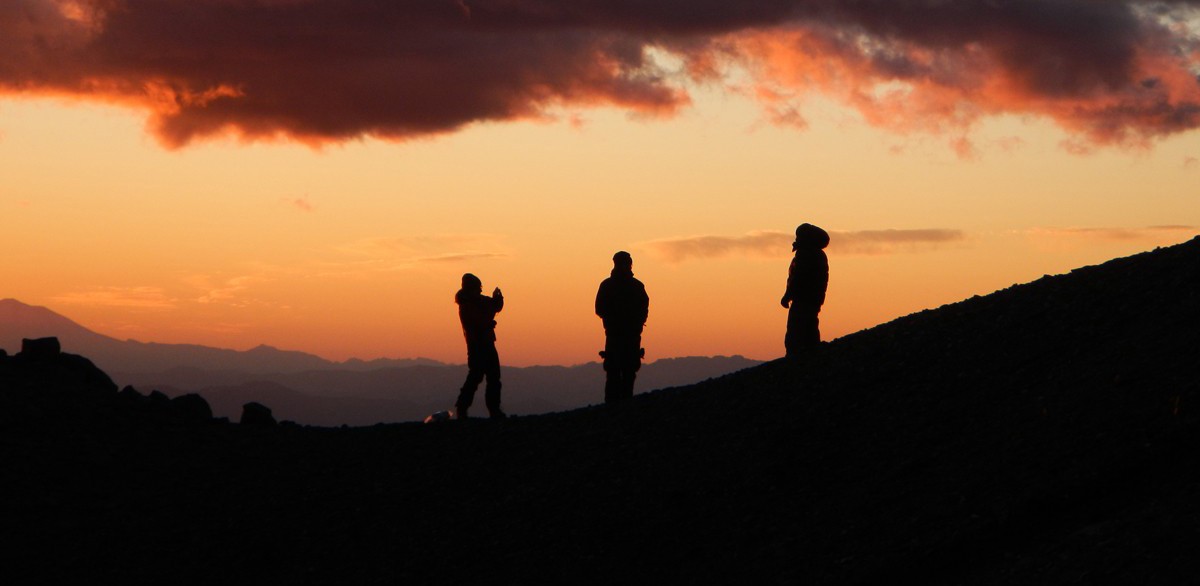
Lanín Volcano is one of the most outstanding mountain figures in Patagonia. Its prominent, majestic conical shape draws admiration from every corner of the region. It can be seen from 200 km away, from routes 237 and 40, from the surrounding lakes, and from planes flying to Bariloche or San Martín de los Andes. It's so striking that it's hard to confuse it with its magmatic neighbors Villarrica (still active today), Osorno and Llaima. Its name, “Lan – In,” comes from the Mapuche language and has several meanings: ...“died in a robbery”... “the dead rock”... and “to sink or we sink.” 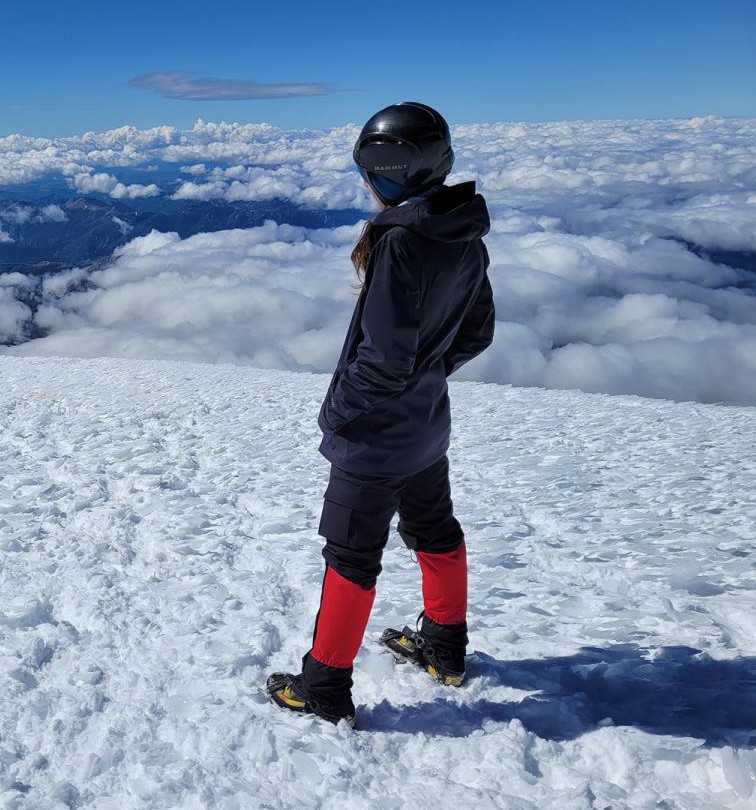
Lanín can be climbed from any of its faces; the south face is the most technically difficult, and the north face is the most commonly used, reaching the summit on foot on slopes of up to 35 degrees. It's a physically demanding climb and requires good preparation and training. The standard route up the volcano has three basic, typical mountain refuges: BIM (Batallón de Infantería Militar) at 2,250 m, the RIM (Regimiento de Infantería Militar) at 2,350 m, now out of use, and CAJA (Club Andino Junín de los Andes) at 2,450 m. Today, in the BIM refuge area, several domes have been set up, run by some companies, giving visitors a bit more comfort, such as a dining tent, kitchen and sleeping area. From the summit of Lanín, the view is enormous. To the south, you can see (from the foot of the mountain) lakes Huechulafquen, Paimún, Epulafquen, Carilafquen, Lolog, Lacar and many more, all the way to a view of Mount Tronador itself (3,554 masl), south of Bariloche. To the north, lakes Tromen, Quillén, Ñorquinco…and to the west, all the volcanoes of Chile.
An invitation to dream of a mountain that is both magical and real. A chance that nature gives us to live with our spirit filled with emotion and feeling.
To access the training program to prepare for climbing Lanín and other great mountains, you can click HERE.
To access the Lanín climb program, two (2) days with training included, click HERE