Skip to content

Ascent of San Francisco Volcano, 6040 masl, Route of the Six-Thousanders

A long week to attempt one of Argentina's classic six-thousanders

  • DateFebruary 1, 2027
  • Duration7 days
  • Meeting PointFiambalá, Catamarca
  • DifficultyDemanding
  • Availability8 spots

The trip

PLANNED ITINERARY: 

Day 0: We recommend arriving in Fiambalá on this day. Introduction with guides and coordinators. Free afternoon to enjoy the hot springs and the area. 

Day 01: Cortaderas, 3300 m. Early in the morning we leave Fiambalá by vehicle for Cortaderas. Check in at the inn. Acclimatization climb up Cerro Pastos Largos. Dinner and overnight at the Cortaderas inn.

Day 02: Las Grutas, 4000 m. Transfer to the Las Grutas refuges. Rest. 

Day 03: Las Grutas, 4000 m. Short walk around the area and climb up Cerro Falso Morocho, 4700 m, to continue acclimatizing. Hydration, dinner and overnight at the refuge. 

Day 04: Las Grutas, 4000 m. On this day we will climb up to 5000 m, to continue and complete the acclimatization period. 

Day 05: Las Grutas, 4000 m. Rest. Hydration and preparation for summit day. 

Day 06: Summit and Las Grutas. Very early, we begin our attempt to reach the summit of San Francisco Volcano, 6036 m, our first objective. A transfer to the parking area at 5100 m, followed by a long and demanding push to the summit. On the way down, we get into the vehicles and descend to Las Grutas. Overnight in Las Grutas.  

Day 07: Breakfast. Descent to Fiambalá. End of the expedition. 

Elevation profile (m a.s.l.)

Good to know

High Catamarca, home to the world's highest volcanoes

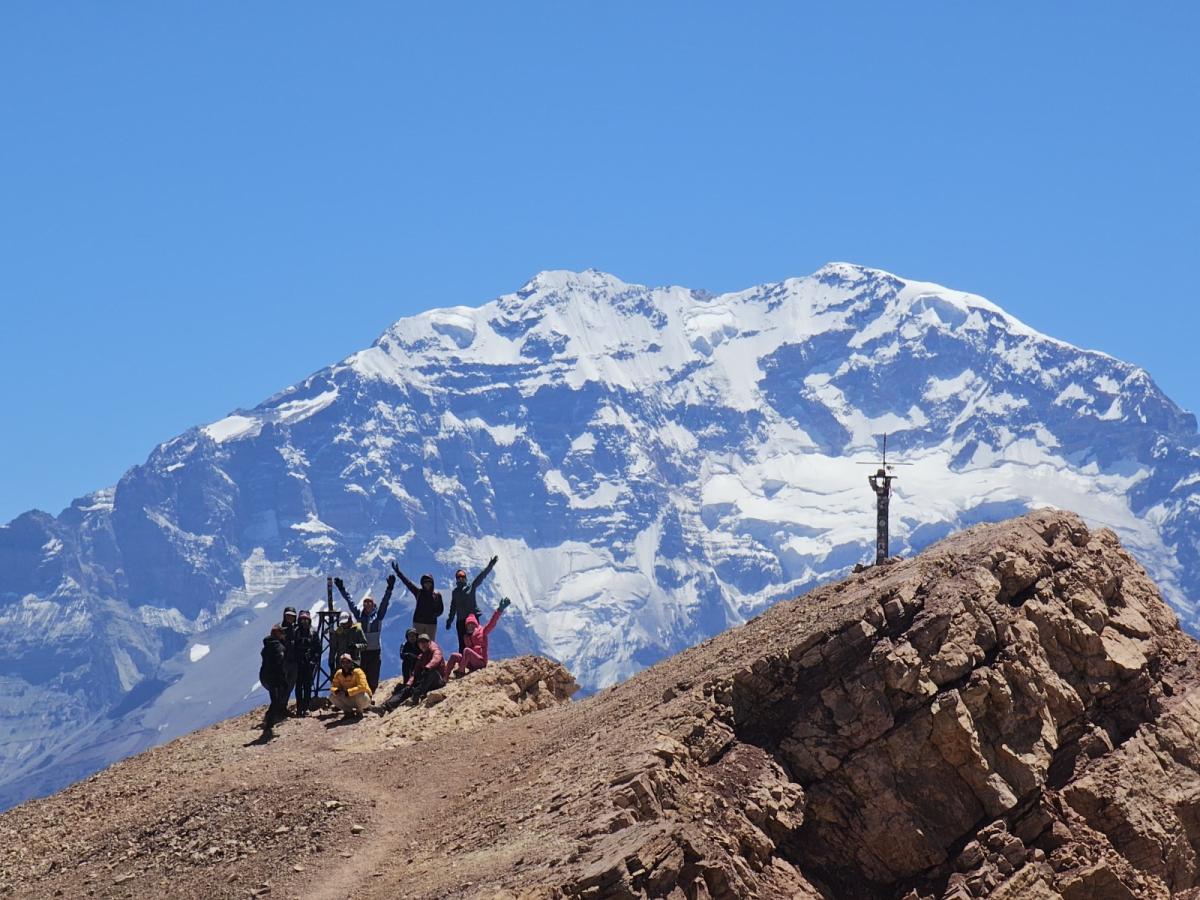
Located in Catamarca's renowned six-thousander region, the Route of the Seismiles or the Roof of the Andes (home to the largest concentration of mountains over 6500 meters, and many over 6000), San Francisco Volcano is a major goal for mountaineers, often climbed as a "first six-thousander." Although it does not involve a significant trekking approach (it is mostly done by vehicle), as is the case with other expeditions to high-altitude mountains, San Francisco has earned its place among Argentina's select group of classic six-thousanders.

This expedition can be combined with an ascent of Pissis.

What is included

  • In-out transfer from Fiambalá
  • Permanent support vehicle.
  • Hostel-style lodging in Fiambalá, 1 night (the last one)
  • 1 night at Hosteria Cortaderas
  • Lodging at the Las Grutas mountain refuge, 5 nights.
  • Professional mountain guides
  • Tents, if needed
  • Full board on the mountain (meals from lunch on day 1 to breakfast on day 7)
  • General cooking and communication equipment
  • Prior informational meetings
  • Ongoing support

Not included

  • Travel to Fiambalá
  • Meals in Fiambalá
  • Beverages
  • Tips
  • Personal gear

Meals

On all our expeditions we provide meals on a FULL BOARD basis.

  • Trail lunches (cold meals): Milanesa and tomato sandwiches, cold cut sandwiches, snack platters, salads, appetizers, etc.
  • Dinners: Vegetable, bacon and chorizo stew, chicken and vegetable casseroles, pasta with various sauces or stew, grilled beef, chow fan, chicken and rice casserole, pizzas...
  • Breakfasts and afternoon snacks: Tea, coffee, cappuccino, mate cocido, mate, powdered milk; bread, cookies, jam, honey, dulce de leche; cereal, fruit.
  • Individual snack bag with energy food: nougat bars, energy bars, nuts, chocolate, alfajores, candy, and more...

It is necessary to complete the personal/medical form to note if anyone has any dietary restrictions.

Recommended gear

GENERAL EQUIPMENT Mandatory
  • Trekking backpack (60 to 80 liters)
  • Warm sleeping bag (–10 degrees comfort rating, e.g. 1000g of good down or synthetic fill).
  • Sleeping pad (10 to 15mm). Or an inflatable sleeping pad (optional)
  • Trekking poles (can be rented at AEX) 
  • Physical fitness certificate *** (Your doctor must confirm that you are fit to carry out this activity).
  • Travel assistance insurance. *** (Check if included with your credit card / health insurance.)  (mandatory for international trips: Portillo, Vuriloche, Peru, Africa, Nepal.)
FEET 
  • 1 pair of high-mountain boots (double or rigid boots), please ask.
  • 1 pair of trekking shoes (light boots) 
FIRST LAYER (Base layer) 
  • Changes of underwear.  
  • Cotton t-shirts (for camp and sleeping)  
  • Synthetic short-sleeve shirts/t-shirts
  • Synthetic long-sleeve shirt
  • Polypropylene or similar pants/leggings (not cotton). To use as a base layer under warm clothing  
  • Thin polypropylene or similar gloves (not cotton)  
  • Polypropylene or similar balaclava (not cotton)
  • Pairs of thin polypropylene or similar socks (not cotton), worn against the skin.
  • Buff-type multifunction neck gaiter 
SECOND LAYER (Warmth) 
  • Pairs of trekking socks (synthetic-thermal)
  • Pairs of thick mountain socks  
  • Some cotton or wool socks (wool is good for sleeping)
  • 1 pair of long trekking pants or shorts/leggings
  • 1 pair of warm long pants (e.g. fleece pants).  
  • 2 warm layers (fleece jacket, wool sweater, 100-weight fleece or 200-weight fleece)
  • Down jacket
  •  Fleece gloves  
  •  Warm hat (fleece)  
  •  Sun cap (with flaps) 
THIRD LAYER (windproof and waterproof) 
  • Waterproof jacket (Ultrex, Gore-Tex or similar)
  • Pant cover (Gore-Tex or similar, or ski-type) - Optional
  • Third-layer gloves or mittens (waterproof and breathable). Ski-type is fine
  • Mountain gaiters 
PERSONAL ITEMS 
  • Passport, ID card, national ID.
  • Travel assistance insurance. (suggested)
  • Health insurance.***
  • Travel assistance insurance (Suggested / Mandatory if you do not have health insurance.***)
MISCELLANEOUS 
  • Headlamp with batteries (plus 2 spare batteries).  
  • Sturdy plastic bags to store clothing. 
HEALTH & HYGIENE 
  • Sunglasses with UV Category 4 protection
  • Spare glasses (ski goggles work too, highly recommended)
  • Personal first-aid kit (medication with the relevant prescription).
  • High-factor sunscreen, lip balm
  • Soap, small shampoo and small towel.
  • Other items
  • Toilet paper. Tissues. Baby wipes. 
 KITCHEN 
  • Water containers, 2 liters minimum (can be a plastic bottle), Camelbak, Nalgene or similar
  • Small thermos
  • Personal tableware: Plate, cup/mug, cutlery 
 OPTIONAL, not mandatory (depending on space and weight) 
  • Silver tape, for blisters and repairs.
  • Mate, straw (bombilla) and yerba.
  • Steel thermos.
  • Water purification tablets.
  • Mini sewing kit.  
  • Binoculars, monocular. Camera or video equipment.
  • Book, notebook, travel journal, pencil, pen.
  • Games: cards, dice, etc.
  • Pocketknife 

FAQ

If I've never done mountaineering, can I dream of reaching the highest point of  this mountain?

As long as you are physically fit and able to follow the personal and/or group training plan we propose, and can do some prior trekking and mountaineering outings with us or on your own.

I don't have even half of the required gear, can it be rented? What's best to buy?

We'll advise you on this. Many items can be rented, and others are better bought.

How demanding is this expedition really? How much do we walk per day?

We are not walking every day. The expedition is long because the body needs a mandatory altitude acclimatization period; some days we just rest. 

Where do we sleep?

We sleep at refuges or mountain camps with comfortable igloo-style tents for 2/3 or 4 people. 

Do I need to bring a tent?

Tents and refuges are included in the service. 

What is the minimum age for this activity?

From age 18 and up.

How much does the backpack weigh?

Between 10 and 15 kg, but don't worry, you won't need to carry it — you get to the refuge by vehicle, and on summit day you head out with a light pack.

What do we eat?

On all our expeditions we provide meals on a FULL BOARD basis.

Trail lunches (cold meals): Milanesa and tomato sandwiches, cold cut sandwiches, snack platters, salads, appetizers, etc.

Dinners: Vegetable, bacon and chorizo stew, chicken and vegetable casseroles, pasta with various sauces or stew, grilled beef, chow fan, chicken and rice casserole, pizzas...

Breakfasts and afternoon snacks: Tea, coffee, cappuccino, mate cocido, mate, powdered milk; bread, cookies, jam, honey, dulce de leche; cereal, fruit.

Individual snack bag with energy food: nougat bars, energy bars, nuts, chocolate, alfajores, candy, and more...

It is necessary to complete the personal/medical form to note if anyone has any dietary restrictions.

Difficulty graduation

Backpack weight40%
Physical80%
Technical20%
Mental60%
Altitude80%

Scale 0–100%. Argentina Extrema graded difficulty system. How it is measured

Photos and videos

Request your place

We will reply by email or WhatsApp with full details, payment options and how to confirm.

Enquiry about: Ascent of San Francisco Volcano, 6040 masl, Route of the Six-Thousanders — February 1, 2027
No commitment. You will not be charged.

Get ready

You may also like