Trekking & mountaineering
The Mystery and Tragedy of the Dollar Plane
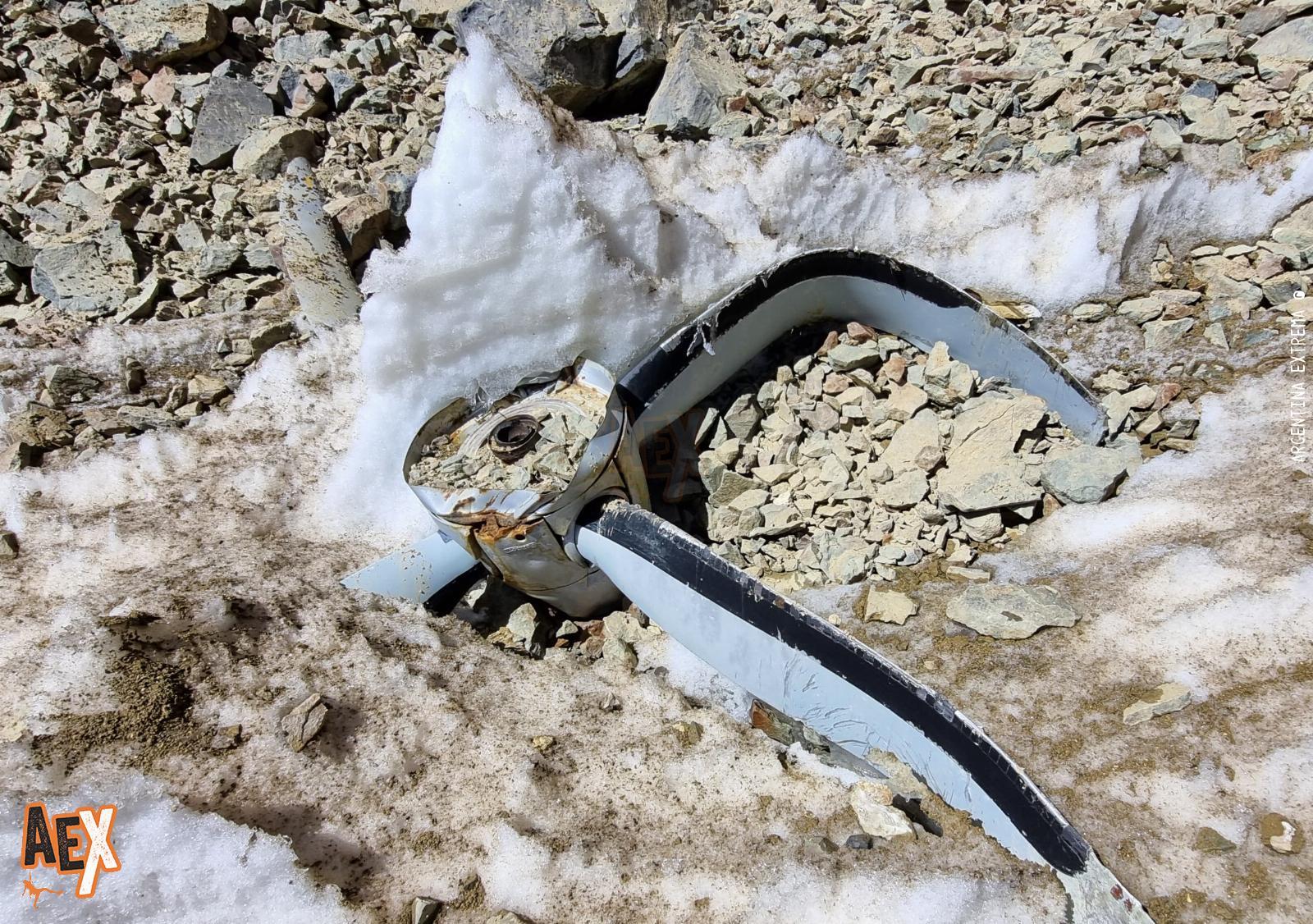
The story of the plane that crashed on Cerro El Sosneado carrying thoroughbred horses, jewelry and a lot of m…
A week-long trek on foot along the eastern face of the Colossus of the Americas
A preparation trip for those who dream of one day reaching the summit of Aconcagua, and also for lovers of mountain trekking who want to enjoy the best scenery next to the great Stone Sentinel.
The adventure of walking around and along the slopes of Cerro Aconcagua always feels very special. From dreamers hoping one day to reach the highest point in the Southern Hemisphere and the Americas, to lovers of great treks, this expedition – different from the traditional one along the crowded normal route – invites enjoyment and admiration. The landscape that unfolds here as you advance is truly striking.
For some, the East and Northeast face is the most appealing side of the Colossus of the Americas. There you head in through the Valle de Vacas, then the Valle de los Relinchos, as far as Plaza Argentina, at 4200 m above sea level, the base camp of Cerro Aconcagua used mainly for climbing the Polish Glacier route, the False Polish Glacier route (360°), and even the challenging East Glacier route.
We offer you a trip to reach the least-visited base camp on Aconcagua, along with the option of going up to the high-altitude camps, above 5000 meters above sea level. This option is optional (not mandatory) and will depend on the weather and the acclimatization each adventurer manages to achieve.
Day 0 Recommended: Arrive in Mendoza this day. Introduction of guides, gear check, rental guidance, printing of permits, packing of mule bags, and more.
Day 1: Mendoza-Penitentes (2700 m.a.s.l.). Transfer to the Aconcagua Provincial Park office to apply for and pay for trekking and climbing permits. Last-minute shopping. Transfer to Los Penitentes (2700 m.a.s.l.). Check-in at the mountain hostel/refuge. Rest, short walks, hydration. Dinner and overnight stay.
Day 2. Pampa de Leñas (2950 m.a.s.l.). Transfer to Punta de Vacas. Permit check by park rangers. First trekking stretch to Pampa de Leñas, 4 to 5 hours. Setting up camp. Rest and hydration. Grilled meats and vegetables for dinner. Overnight stay.
Day 3. Casa de Piedra (3250 m.a.s.l.). Second trekking stretch to Casa de Piedra, a beautiful spot with the first view of Aconcagua's east face. Setting up camp again, rest, hydration, acclimatization. Dinner and overnight stay.
Day 4. Plaza Argentina (4250 m.a.s.l.). Today we climb up the Valle del Relincho (the historic entry point of the 1934 Polish expedition) to Plaza Argentina, the east base camp of the Colossus of the Americas. We will settle into large tents with tables and chairs for comfort + set up sleeping tents. Rest. Dinner and overnight stay.
Day 5. Plaza Argentina (4250 m.a.s.l.). Today we devote ourselves to resting at this base camp, with short walks, hydration, and good food. Also enjoying the surroundings and their great views.
Day 6. Camp 1 (5000 m.a.s.l.)-Plaza Argentina (4250 m.a.s.l.). A day climbing up to Camp 1 at 5000 m.a.s.l. (optional); we will use this outing to see the great mountain much closer, at the Col Ameghino, next to the peak of the same name. Return to Plaza Argentina in the afternoon.
Day 7 Casa de Piedra (3250 m.a.s.l.). Descent through the Valle de Relinchos, now heading back, to Casa de Piedra, where we set up our last camp on the mountain and look back on the adventure we've had.
Day 8 Punta de Vacas-Mendoza. Final stretch of the trek. We descend to Punta de Vacas, passing through Pampa de Leñas and bidding farewell to Aconcagua Provincial Park and all its magic. Transfer by charter vehicle to Mendoza. End of our services.
Grading for this trek: M2-F3-T2-P3
In our trekking, multi-day trekking, and mountaineering/climbing programs, we have defined the grading from 1 to 5, across the four factors we consider decisive: backpack, physical, technical, and psycho (psychological).
Backpack (M): This factor relates to the weight we must carry in our backpacks. Treks or multi-day trips where pack animals are available let us carry less weight on our backs. Multi-day treks of several days in Patagonia (without the option of pack mules), on the other hand, generally require us to carry more weight, especially in the first few days.
Physical (F): We consider physical demand to be the strain that can affect us both aerobically (climbs = possible shortness of breath), muscularly (endurance = many hours of walking), and on the joints (descents = knees/ankles).
Technical (T): Technical difficulty is based mainly on the terrain: how much it costs us to climb a slope, whether it is very steep, or whether at some point we need to use our hands (simple climbing), whether on rock or snow/ice, or gear such as crampons and ice axes on other climbs.
Psycho (P): We maintain that this factor, the psychological one, especially on ascents, is a significant one. Each person needs a degree of conviction, confidence, self-control, and willpower to reach a goal. And depending on the attitude with which we face distances, elevation changes, terrain, and so many other objective factors, we can achieve very different results.
So, for two-day trips, we can give the following examples:
1- the classic trek with an ascent of Cerro Tres Picos in the Sierra de la Ventana, Buenos Aires province, with a round-trip trek and one night camping in the sierras, we can rate it: M2-F1-T1-P1
2- the classic ascent of Volcán Lanín, in Neuquén, with one night in a refuge or tent, via the normal route: M2-F4-T2-P3
And for 5-day to full-week trips, we can give the following examples:
1- Round trip and ascent of Nevado de Chañi, Jujuy-Salta, with mule porterage
a) Trek without a summit attempt: M2-F3-T1-P2
b) Trek with summit ascent (the difference only applies to summit day): M3-F4-T3-P4
2- Andes Crossing Trek via Paso Vuriloche, Patagonia: M5-F3-T1-P2
• Trekking backpack (60 to 80 liters)
• Warm sleeping bag (-5 to -10 degrees comfort rating) (e.g. 700g of good down or synthetic fill).
• Insulating sleeping pad (10 to 15mm).
• A pair of trekking poles
• Sturdy waterproof plastic bags to store all clothing inside the backpack.
CLOTHING
• Socks: 5 pairs of trekking socks
• Underwear
• 1 pair of trekking shoes/boots (in good condition)
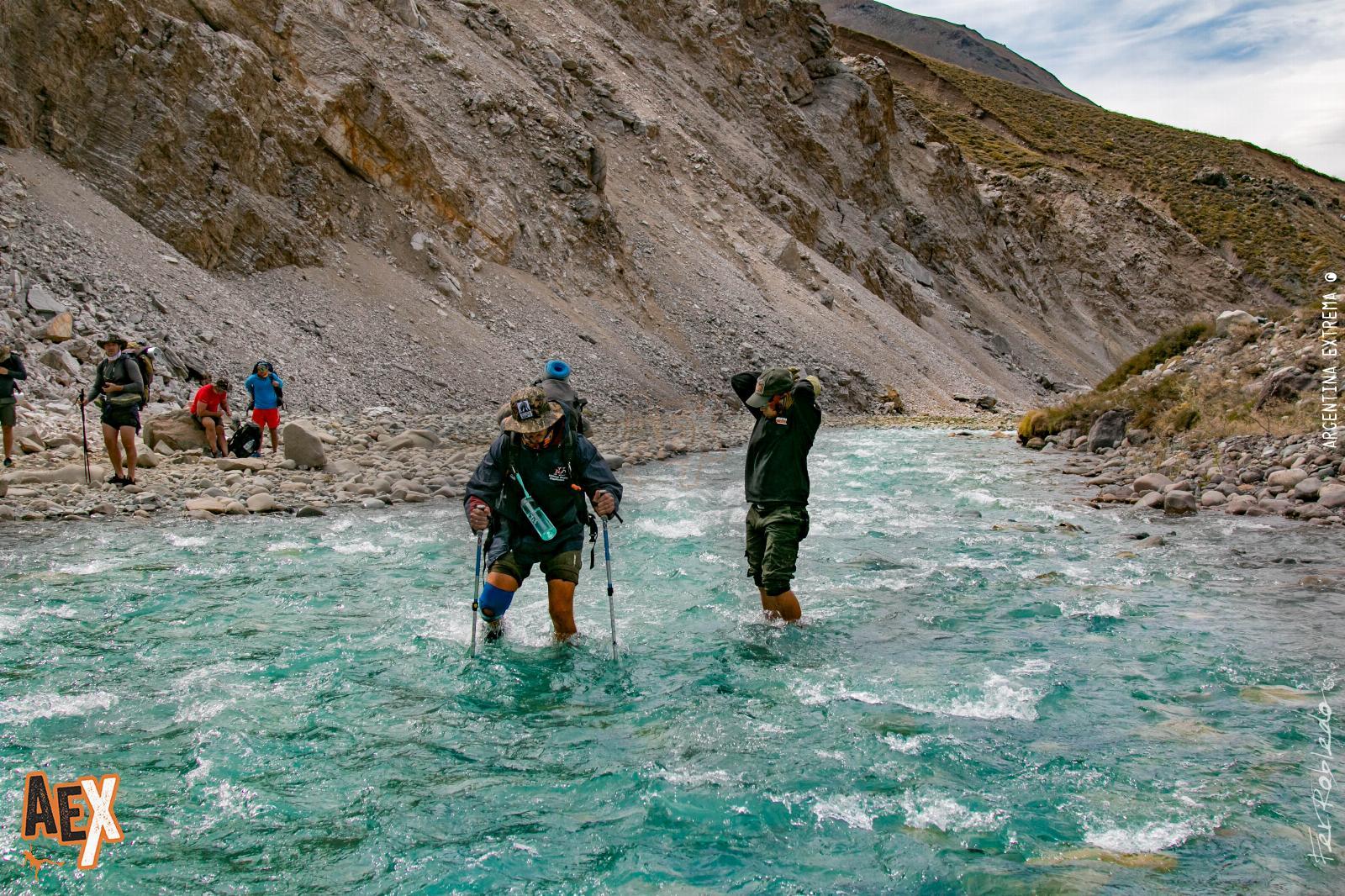
• 1 second lightweight spare pair for wading (crossing rivers) and getting wet.
• Long trekking pants (NOT JEANS)
• 1 pair of long base-layer pants or leggings (not mandatory)
• 2 synthetic (dry-fit type) short-sleeved t-shirts + cotton t-shirts
• 1 long-sleeved t-shirt
• 2 warm layers (fleece jacket)
• 1 waterproof jacket (ideally also breathable and windproof)
• 1 sun hat/cap (with brim)
• 1 scarf to protect the neck from the sun (Buff-type multifunctional scarves)
• Warm gloves.
• Warm hat
PERSONAL ITEMS
• Passport, ID card, national ID.
• Health insurance, medical coverage.
• Personal/medical form, authorization.
MISCELLANEOUS
• Headlamp with batteries.
• Mountain sunglasses.
• Sunscreen (SPF 45 or higher). Lip balm
• Toilet paper. Tissues. Baby wipes.
PERSONAL KITCHENWARE
• Water containers for at least 3 liters (can be a Nalgene-type or plastic bottle)
• Cutlery / Plate or container (no glass or aluminum) / Plastic or enamel cup or mug (no glass, no aluminum).
• Dish towel.
OPTIONAL, not mandatory (check space and weight)
• Warm jacket (down or synthetic)
• SILVER TAPE, for blisters and repairs.
• Mate, bombilla, and yerba.
• Steel thermos.
• Binoculars, monocular. Photo or video equipment.
• Book, notebook, travel journal, pencil, pen.
• Games; cards, dice, etc.
• Pocketknife
• Whistle and lighter.
For any mountain activity you need some prior physical preparation, or to be physically active.
We suggest having experience hiking and walking with a backpack; we recommend being in good physical shape and understanding that this is a multi-day trek, where you walk during the day carrying a backpack, and spend the night camping.
Overnight stays take place at mountain campsites in comfortable dome-style tents for 2/3 or 4 people, plus one mountain hostel.
Tents are included in the service.
Even though it's summertime, in mountain and/or wilderness areas temperatures tend to drop at night.
Stops happen with a frequency and pacing that depends on the intensity.
There are stops for lunch, an afternoon snack, and rest.
From age 13 onward.
For a woman, a range of 8 to 10 kilos; for a man, 10 to 12 kilos.
We have a mule porterage service, which carries the general equipment – such as kitchen items, food, tents, and safety gear – on the stretches between camps.
On all our expeditions we provide meal service ON A FULL BOARD BASIS.
On-the-go lunches (cold meals): milanesa and tomato sandwiches, cold-cut sandwiches, picadas, salads, savory pastries, etc.
Dinners: vegetable-bacon-chorizo stews, chicken and vegetable casseroles, pasta with various sauces or stew, grilled meat (chivito), Chaw Fan, chicken and rice casserole....
Breakfasts and afternoon snacks: tea, coffee, cappuccino, mate cocido, mate, powdered milk; bread, crackers, jam, honey, dulce de leche; cereal, fruit.
It is necessary to fill out the personal/medical form to clarify if anyone does not eat certain kinds of food.
Scale 0–100%. Argentina Extrema graded difficulty system. How it is measured


We will reply by email or WhatsApp with full details, payment options and how to confirm.
Trekking & mountaineering
The story of the plane that crashed on Cerro El Sosneado carrying thoroughbred horses, jewelry and a lot of m…
Trekking & mountaineering
The project. Heights, location and main features of the American giants
Expeditions · Cuyo
from US$ 980
Expeditions · Cuyo