Skip to content

Trekking in Pehuenia - Huella Andina - Lake Moquehue, Lake Ñorquinco - Northern Patagonia

A trek among lakes and imposing volcanoes. Stages of the Huella Andina

  • DateOn request
  • Duration5 days
  • Meeting PointJunin de los Andes
  • DifficultyIntermediate

The trip

Of Pehuén Trees, Lakes, and the Andean Range 

The Huella Andina trail is Argentina's first long-distance trekking route. Spanning more than 500 km, it crosses 5 National Parks and 3 provinces from north to south.

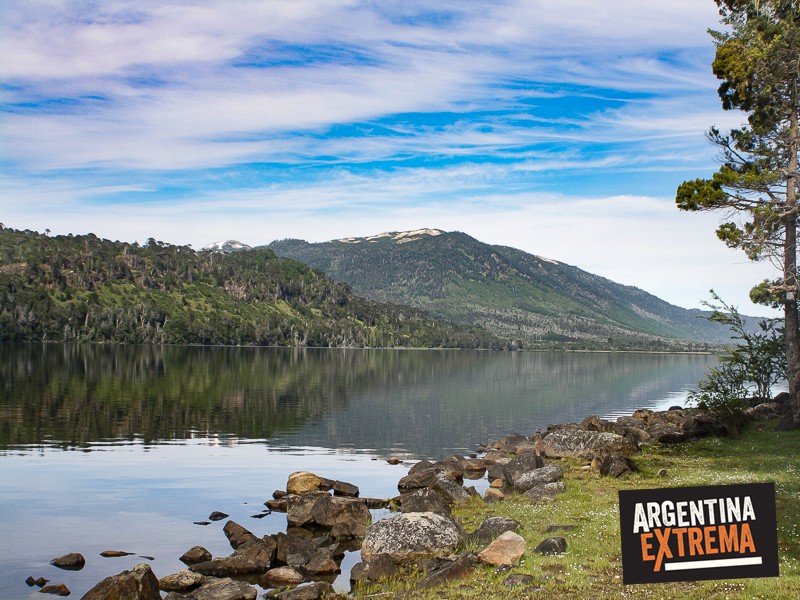
The area of great lakes that enrich the forests of the northern sector of Lanín National Park and the Pehuenia region marks the start of the Huella Andina and the domain of the Araucaria (Pehuén) trees. This is also where the last Mapuche communities still live, in a kind of “exile.”
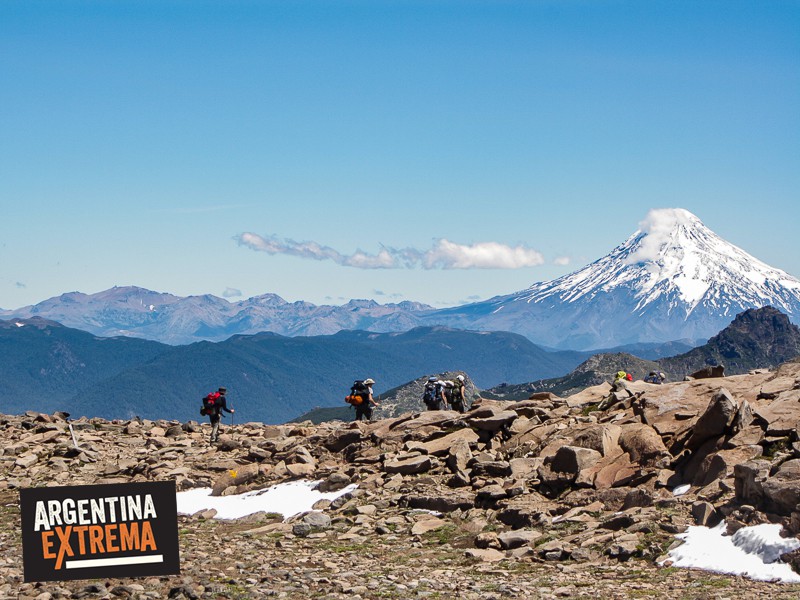
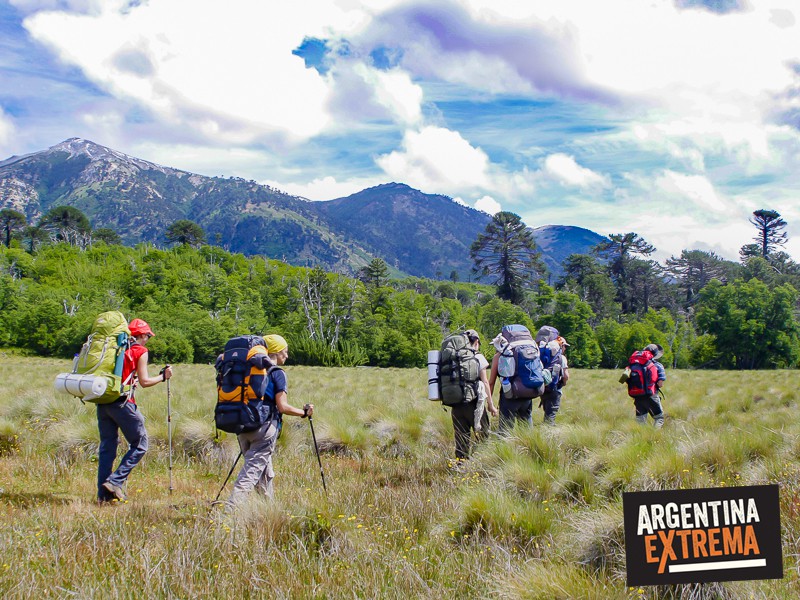
This route invites trekkers, adventurers, and enthusiasts wanting to start out on the experience of walking through solitary, astonishing landscapes, backpack on their back. The two middle days will be the main walking days, and the days at either end are for enjoying the surroundings, both at Lago Moquehue and at Ñorquinco.

"When you try to describe places with extraordinary landscapes, places that push the conceptual limits of paradise and provoke boundless wonder, you never find the right formula in photos or in words."


Planned itinerary:

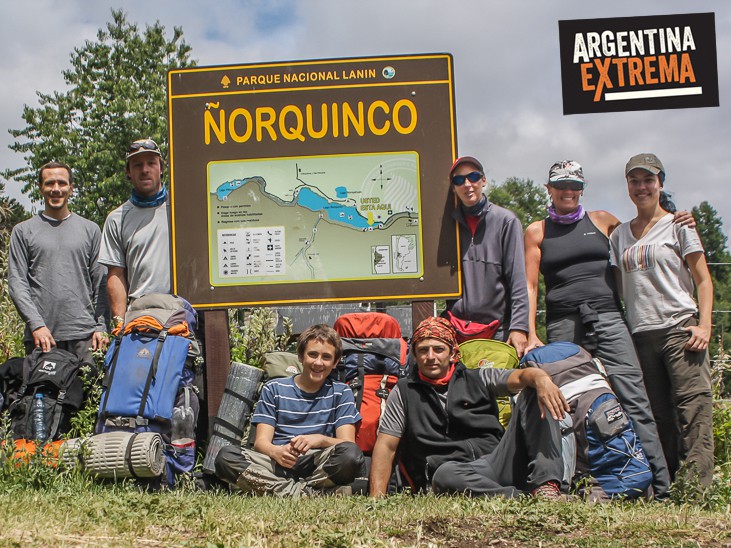
Day 1: Meeting in Junin or San Martin de los Andes. Early transfer to Lago Ñorquinco, where we set up our first camp. Short walks to some nearby waterfalls. Dinner, overnight stay.

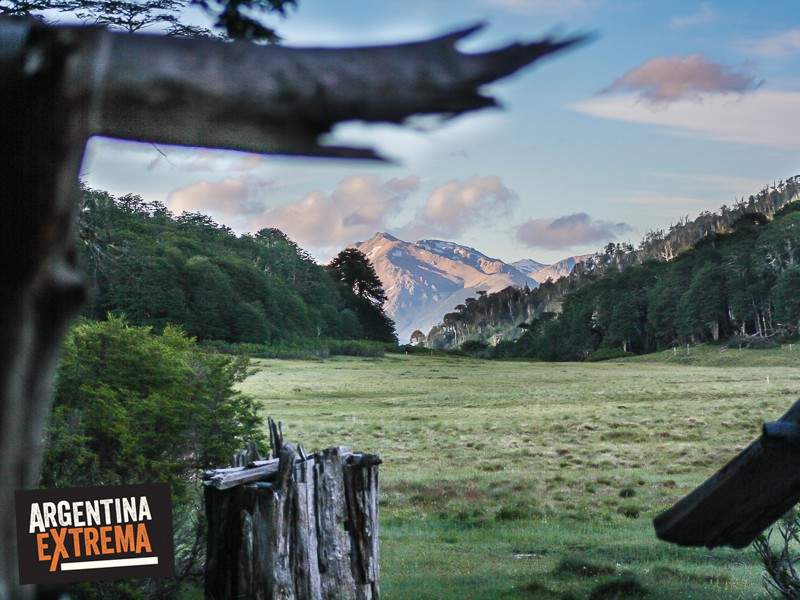
Day 2 Starting the trek, we skirt Lago Ñorquinco along its southern shore. We pass by the beautiful Colocó waterfall. Then, in an area of large wetland meadows, we find the great Chusquén meadow, where there are old buildings abandoned by the Mapuche long ago. We continue on to the campsite at Pampa de Castro. Setting up camp. Dinner and overnight stay.

Day 3: Breakfast. A day descending to the western end of Lago Rucachoroy, stage 5 of the Huella Andina. The open and closed forest shows us the best of Lanín National Park, with large Araucarias, Coihues, and Lengas. Lunch along the way.  After setting up camp, we'll once again have free time to relax by the lake and enjoy the magnificent surroundings. Dinner and overnight stay.

Day 4: The longest day. We set off very early to climb up to the pass next to Cerro Rucachoroi, which gives us the way down into the Lago Quillén basin. Stage 6 of the Huella Andina. It's a long climb, but one that rewards us with great views. Light lunch along the way. Late in the afternoon we reach our next campsite, at Malalco Chico, high in the mountains. Farewell night on the mountain.

Day 5: Very early, we break camp and walk down the long descent that brings us to the Lefiman Mapuche community, then cover the last 5 km along a wide trail to the impressive Lago Quillén, where our transport picks us up to take us back to Junin or San Martin de los Andes. End of the program and of our services.


Good to know

  • Classic Patagonian multi-day trek. With campsites with no facilities, carrying an expedition backpack.
  • You need physical fitness appropriate to the activity; ideally you'll have trained in the previous months on slopes and with a backpack. 
  • ask about the ascent of Volcán Lanín (3776 m.a.s.l.), on the two following days (with one rest day in between)
  • You need to carry your own large backpack. The program has medium physical and technical difficulty.

What is included

  • Local transfer to and from Zapala, Aluminé, or Villa Pehuenia
  • Professional mountain guides, certified by APN (National Parks Administration)
  • Full board in the mountains (breakfast, on-the-go energy snacks, lunch, afternoon snack, dinner)
  • General kitchen equipment (pots, stoves)
  • Main first aid kit and equipment
  • Emergency communication equipment: VHF / satellite phone
  • Sleeping tents
  • Prior informational meetings
  • Suitable training plan
  • Personal accident insurance
  • Ongoing assistance and coordination


Not included

  • Bus and/or plane to Neuquén-Zapala. 
  • Expenses incurred from leaving the program early
  • Tips


Accommodation

In dome-style tents for 2, 3, and 4 people. Wild campsites with no facilities.

Meals

All our expeditions include meals ON A FULL BOARD BASIS.

On-the-go lunches (cold): milanesa-tomato or cold-cut sandwiches, picadas, salads, savory pastries, etc.

Dinners: vegetable-bacon-chorizo stew, chicken and vegetable casserole, pasta with sauce or stew, grilled meat (chivito), Chaw Fan, chicken and rice....

Breakfast/snacks: tea, coffee, cappuccino, mate cocido, mate, powdered milk; bread, crackers, jam, honey, dulce de leche; cereal, fruit.

Please fill out the personal/medical form to flag any foods someone doesn't eat.

Recommended gear

GENERAL EQUIPMENT

  • Special trekking backpack (60 to 80 liters)
  • Warm sleeping bag
  • Insulating sleeping pad (10 to 15mm).
  • Trekking poles

CLOTHING 

  • socks (thin + two thick pairs, ski or synthetic). 
  • 1 pair of trekking shoes/boots (in good condition) 
  • 1 second pair of lightweight spare shoes. 
  • long trekking pants (NOT JEANS)
  • 1 pair of warm long pants or leggings. 
  • changes of underwear. 
  • 3 t-shirts and/or shirts (one long-sleeved) 
  • 2 warm layers (fleece jacket, or wool pullover)
  • 1 waterproof jacket
  • 1 sun hat/cap (with brim) and one warm hat
  • 1 scarf or bandana to protect your neck from the sun
  • Warm gloves and a scarf or neck gaiter.
  • Warm hat

PERSONAL ITEMS

  • Passport, ID card, national ID.
  • Health insurance, medical coverage.
  • Completed personal/medical form, authorization.

MISCELLANEOUS

  • Headlamp with batteries. 
  • Sunglasses.
  • Sunscreen, lip balm
  • Toilet paper. Tissues. Baby wipes.

KITCHEN

  • Water containers for at least 2 liters (can be a plastic bottle) 
  • Cutlery
  • Plate or container. (no glass or aluminum)
  • Plastic, metal, or enamel mug (no glass, no aluminum).
  • Dish towel.

OPTIONAL, not mandatory (check space and weight)

  • Warm jacket.
  • SILVER TAPE, for blisters and repairs.
  • Mate, bombilla, and yerba.
  • Steel thermos. 
  • Binoculars, monocular. Photo or video equipment.
  • Book, notebook, travel journal, pencil, pen.
  • Games; cards, dice, etc.
  • Pocketknife (e.g. Victorinox).
  • Whistle and lighter. 
  • Sturdy plastic bags to store clothing.

FAQ

Do I need to be trained?

For any mountain activity you need some prior physical preparation, or to be physically active.

Do I need previous experience?

No previous experience is required, though we do recommend being in good physical shape and understanding that this is a multi-day trek, where you walk during the day carrying a backpack, and spend the night camping in the wild. 

Where do we spend the night?

Overnight stays take place at mountain campsites in comfortable dome-style tents for 2/3 or 4 people. 

Do I need to bring a tent?

Tents are included in the service. They need to be carried among the group.

What is the weather/temperature like?

Even though it's summertime, in mountain and/or wilderness areas temperatures tend to drop at night.

Are there rest stops?

Stops happen with a frequency and pacing that depends on the intensity.

There are stops for lunch, an afternoon snack, and rest.

From what age can this activity be done?

From age 13 onward.

How much does the backpack weigh?

For a woman, a range of 12 to 15 kilos; for a man, 15 to 20 kilos.

Difficulty graduation

Backpack weight60%
Physical60%
Technical40%
Mental60%
Altitude20%

Scale 0–100%. Argentina Extrema graded difficulty system. How it is measured

Photos and videos

Ask us

We will reply by email or WhatsApp with full details, payment options and how to confirm.

Enquiry about: Trekking in Pehuenia - Huella Andina - Lake Moquehue, Lake Ñorquinco - Northern Patagonia
No commitment. You will not be charged.

You may also like