June 4, 2020 · Fer Robledo
Mountain routes or trekking routes are among the most rewarding activities you can do outdoors. The problem with the mountains is that you have to know how to choose your gear well. Choosing the right shoes for the mountains is vital, since your feet are your most important tool, so today we're going to run through three types of shoes used for trekking, their characteristics, and when each one should be used.
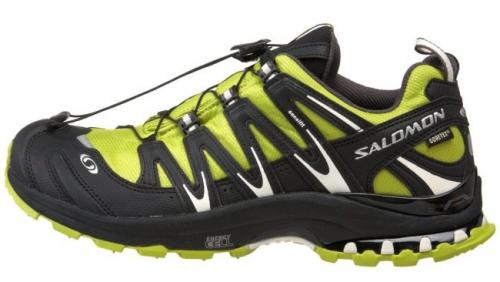 When we're going to hike a one-day trail on easy terrain without many complications, the best option is to use a soft shoe, meaning one whose sole doesn't offer much resistance to twisting. Mountain footwear with a soft sole is quite similar to the sole of a running shoe, with the difference that the sole has more grip and is more technical.
By using a soft shoe for simple routes, we avoid the discomfort of carrying excess weight on our feet, and we avoid having more technical elements of a shoe, such as hard protection, that we won't actually need.
Another consideration is whether the route will have muddy or damp areas, or whether at certain points there will be rocky sections where we need to protect our ankles. In these cases, in addition to the soft sole, we should choose a Gore-Tex type material to protect against water, and adjust the height of the shaft accordingly.
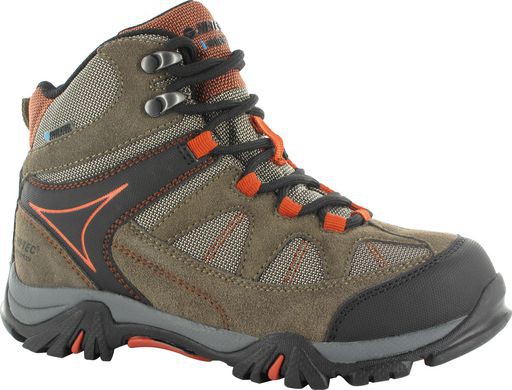 When the trekking route gets more difficult and we're talking about rocky terrain, mid-to-high mountain areas, and greater protection for feet and ankles, the best choice is a semi-rigid shoe. This type of footwear helps provide support in difficult areas like rocks and prevents all the force from falling on the foot alone, since part of the boot's structure also provides support.
This footwear allows a certain degree of torsion but doesn't bend completely or easily, which gives a lot of security to the ankle area and prevents repeated sprains. It's heavier footwear than the previous type, so you need to be in reasonably good shape to wear it, since spending several hours trekking in these shoes requires extra effort.
One thing to keep very much in mind with semi-rigid shoes is that you should try to have them “broken in” before using them for a long route. Since it's a rigid structure, there will be more chafing, and having previously tested and somewhat worn-in footwear minimizes that damage.
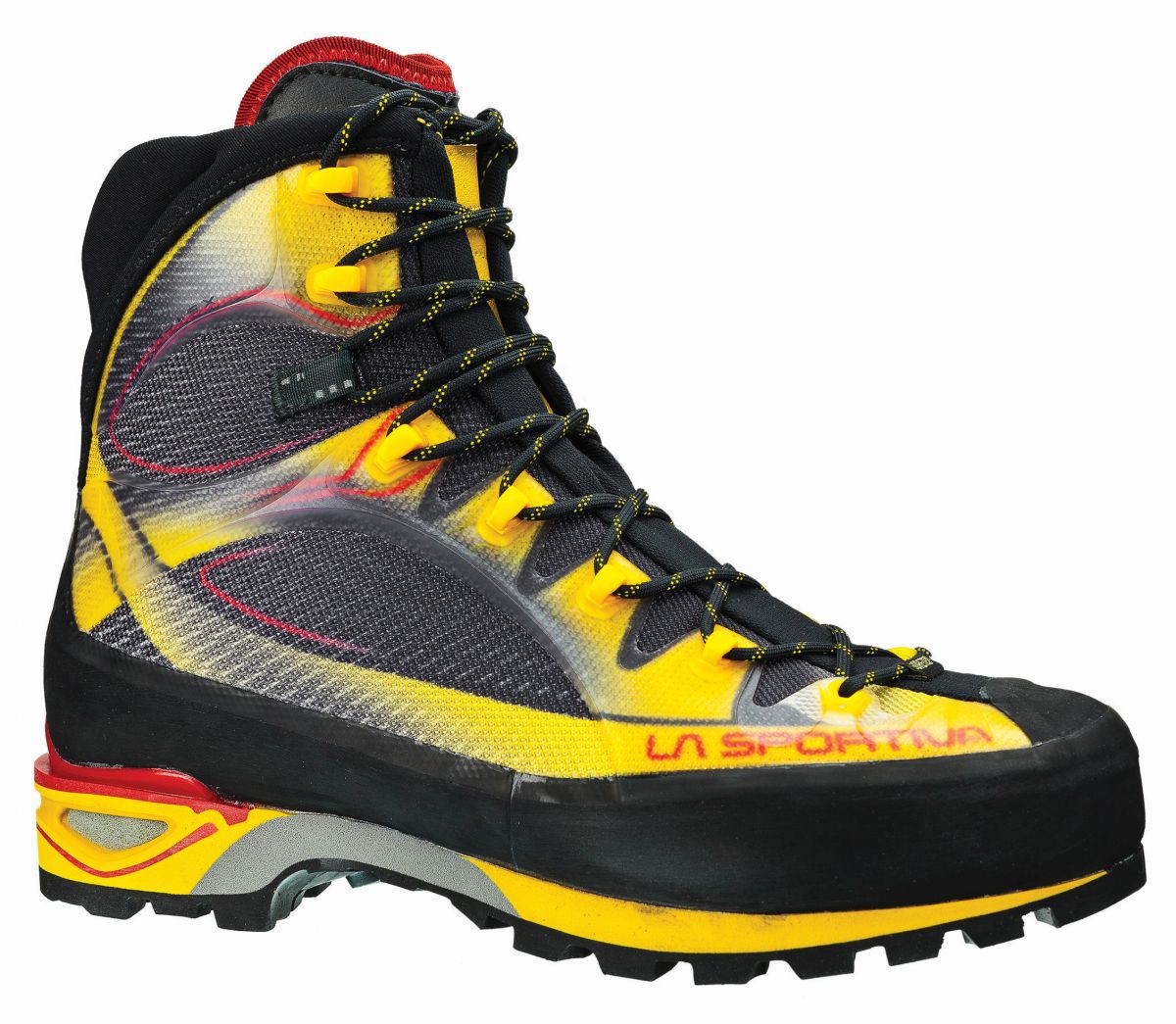 With rigid footwear we're already talking about high mountain routes and very technical terrain. Keep in mind that the sole of this footwear barely gives at all under torsion or flexion, which means it's not an easy task to walk in these shoes. It's similar to walking in ski boots, where your movement becomes somewhat robotic.
The good thing about this type of footwear is that it's very secure and the foot is held completely in place. Normally these boots are used once we need to head into snowy areas, and also areas where we have to walk on ice, since rigid shoes are usually designed for use with crampons.
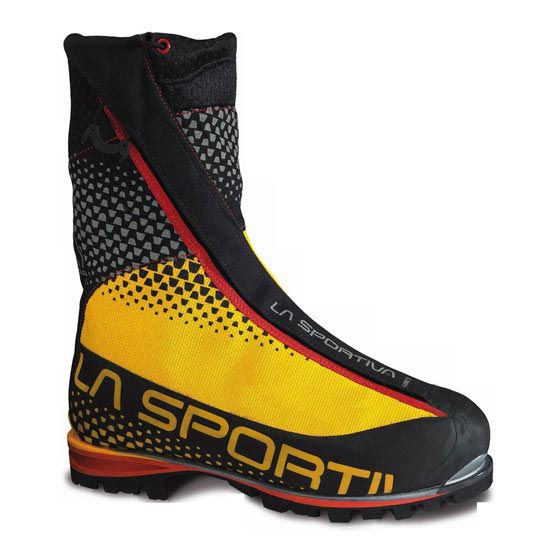 The downside of rigid shoes is that if you choose them for a route that isn't suited to them, you'll have a bad time, because they are heavy shoes that barely allow comfortable movement of the foot, so using them on normal trekking routes is out of the question. Let's say they're shoes for special situations and for well-prepared people.
In short, most of us will use rigid or semi-rigid sole shoes depending on how demanding the route is and the conditions involved. Rigid shoes are already meant for very technical terrain and prepared people; they're not, so to speak, for walking in the mountains on just any day. Choosing the right shoe is very important — imagine doing a 3-4 day route with the wrong shoes…nobody can put up with that, hence the insistence on trying out your shoes weeks or months before the route.
The first thing you need to be clear about is that trekking/mountaineering footwear is not a comfortable sneaker, it's a TOOL that you'll use to move across difficult terrain.
A high-shaft shoe/boot is always advisable, one that supports your ankle and limits lateral flexion of the foot (the cause of sprains). Good footwear should place certain limits on the maximum range of motion of the foot to prevent stress injuries to ligaments and joints.
With that settled, there are characteristics that any footwear should meet (whether a shoe or a boot):
- The sole should ideally be VIBRAM. Vibram takes its name from its creator Vitale Bramani, and Vibram soles are like the Coca-Cola of soles. Many brands use Vibram soles.
- The heel of the footwear should be firm, very firm, so that it holds your heel securely. If it's soft, your foot will still have "play" at the ankle, and in that case you lose the benefit of the high shaft (in addition to getting blisters on your heel).
- And most important, though obvious, is the fit — comfort at the metatarsal/instep. As much as possible you should avoid anything that restricts circulation to the toes. Here, a shoe can be very good, highly recommended and made with the best materials, but if it doesn't fit you well, it's worth as much as the cardboard box it came in. We recommend trying it out properly, walking in it during everyday use, before heading out to the mountains.