May 18, 2026 · Leandro Scheurle
In the world of hiking, trekking and mountaineering, questions always come up about what we should use to cover our feet. There's talk of soles, terrain, coverage, materials and so many other things, but the most important thing to understand is the concept of footwear type. It's also not a hard rule that if you're going to the sierras you can wear low-shaft footwear and if you're going to the Andes it has to be high-shaft. That's determined by objective factors, like the weather, but also subjective ones like experience. In the end, brand-new footwear or footwear with very little wear on it isn't the same as footwear that's already had several outings, or that's even been stored away for many years and is suddenly put back into use.
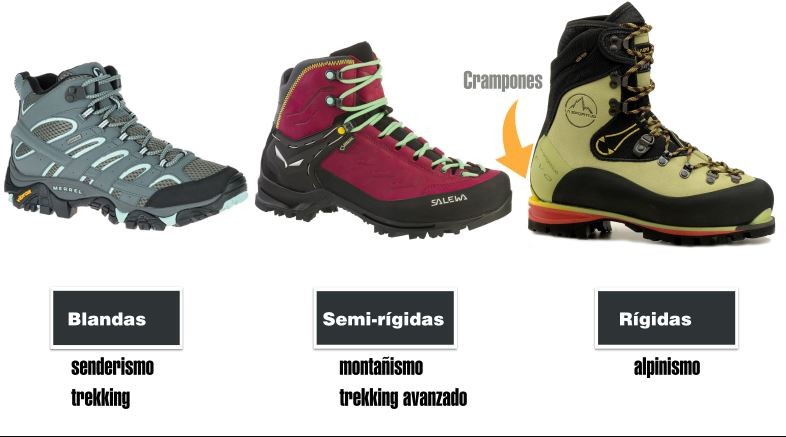
Types - by structure
Soft boots or shoes - These are lightweight, comfortable, and have a flexible sole. They can have a trekking-style build and sole, or be designed for running or trail running. They're more breathable but not very warm. Not very recommendable for use with crampons, although they can be used with strap-on crampons.
Semi-rigid boots - These are heavier but versatile, and work for almost any type of activity, light trekking or ascents. They can be used with strap-on crampons and, some of them, with semi-automatic ones.
Rigid boots - These are used for high mountains, very cold places, and ice climbing. They can be used with all three types of crampons, although they're designed to be used with step-in (automatic) crampons (with a notch at front and back).
Types - by shaft height
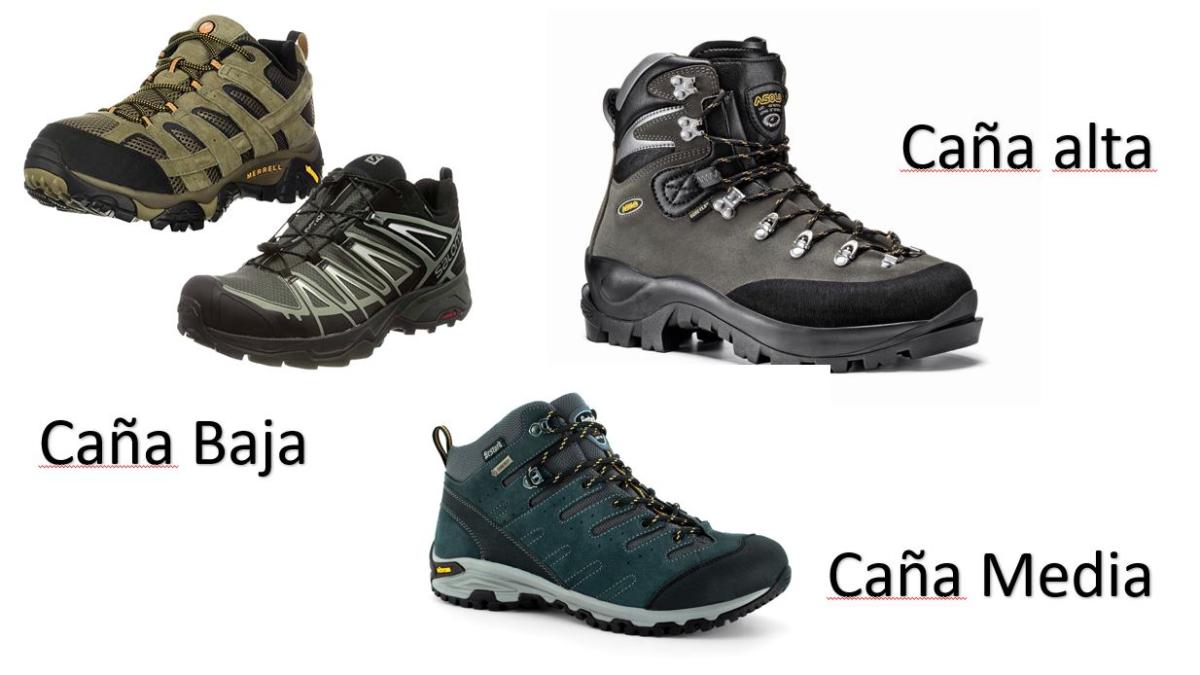
Low shaft - very good breathability and comfort but little ankle protection
Mid shaft - in between the two, with acceptable ankle protection
High shaft - very good ankle protection but heavier and less breathable.
Types - by use.
4 main footwear groups by type and use, to help understand the concept according to the activity and terrain to be covered.
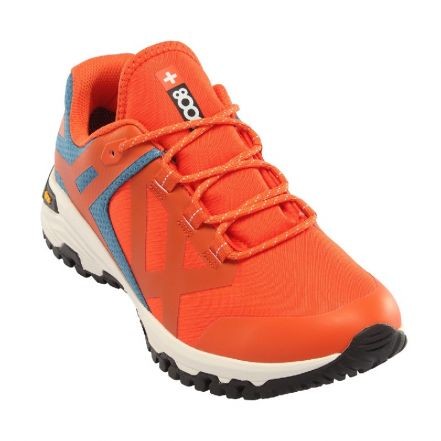
Type 1 – Light Hiking or Trail Running
Footwear that allows outdoor activities with greater comfort. Ideal for short hikes on well-marked, easy trails, although its main purpose is adventure racing, trail running, etc. They're made mostly of fabric and membrane with almost no leather or synthetic material. They can be high or low shaft (high shaft offers more ankle protection).
Example outings: Sierra de la Ventana, Sierras de Córdoba.
Type 2 – Basic to Intermediate Trekking, long crossings, LR circuits (long-distance routes)
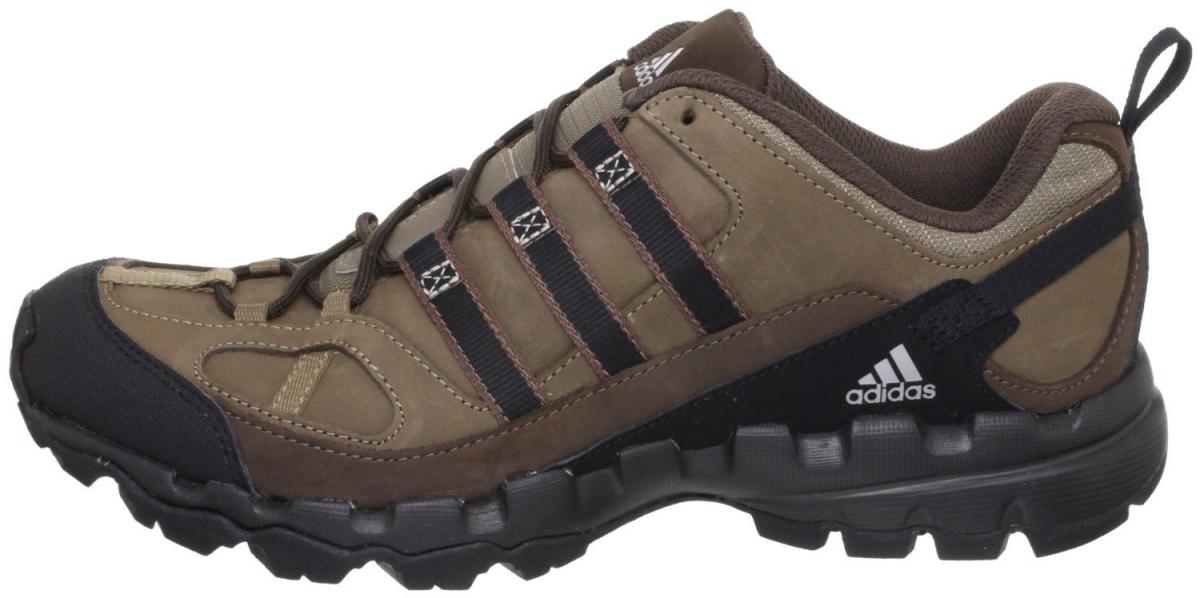
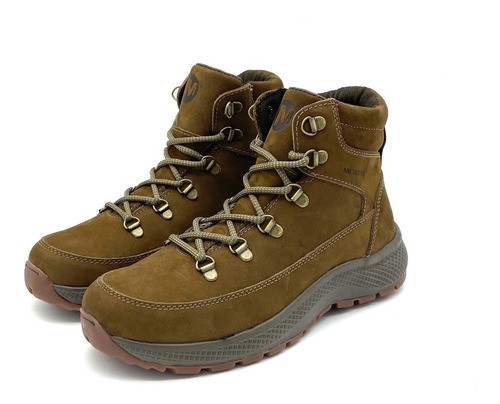
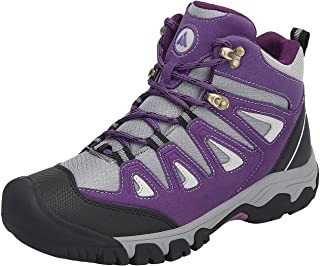
Trekking footwear made with materials suited for hiking on trails and off them, as long as the terrain isn't too aggressive, such as heavily rocky talus slopes. They can be low or high shaft (high shaft has better ankle protection)
Recommended maximum overnight altitude of 3500 masl, without snow. We call "overnight altitude" the place where you camp out overnight, in tents.
Example outings: Any type of long-distance or approach trekking. Ascents: Depending on conditions (little snow and wind) up to 4500 masl.
Type 3 – Classic Ascents
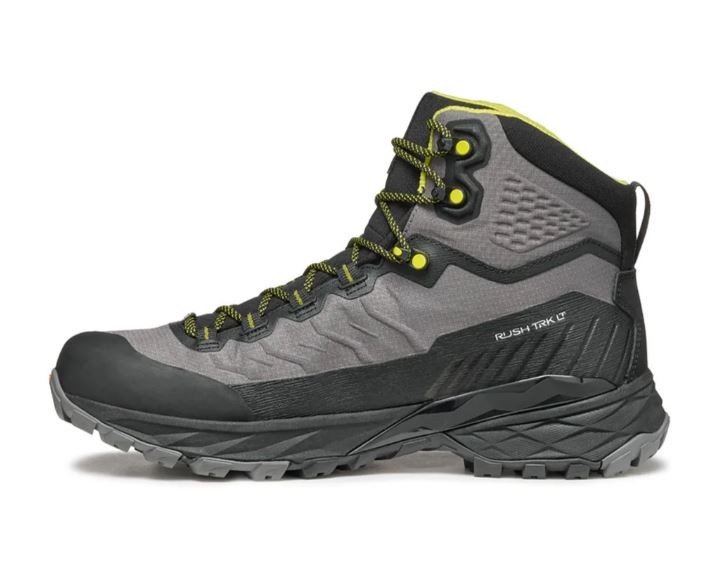
This is footwear that allows for classic ascents of mountains generally up to 5000 masl, including sections with glaciers and snow, but not in the extremely low temperatures found on mountains above 6000 masl. Limited for winter ascents and treks (with constant postholing in snow). These usually have extra breathability membranes and advanced waterproofing.
Example ascents: Lanín, Tronador, Domuyo, El Sosneado, El Plata, Maipo, Chañi.
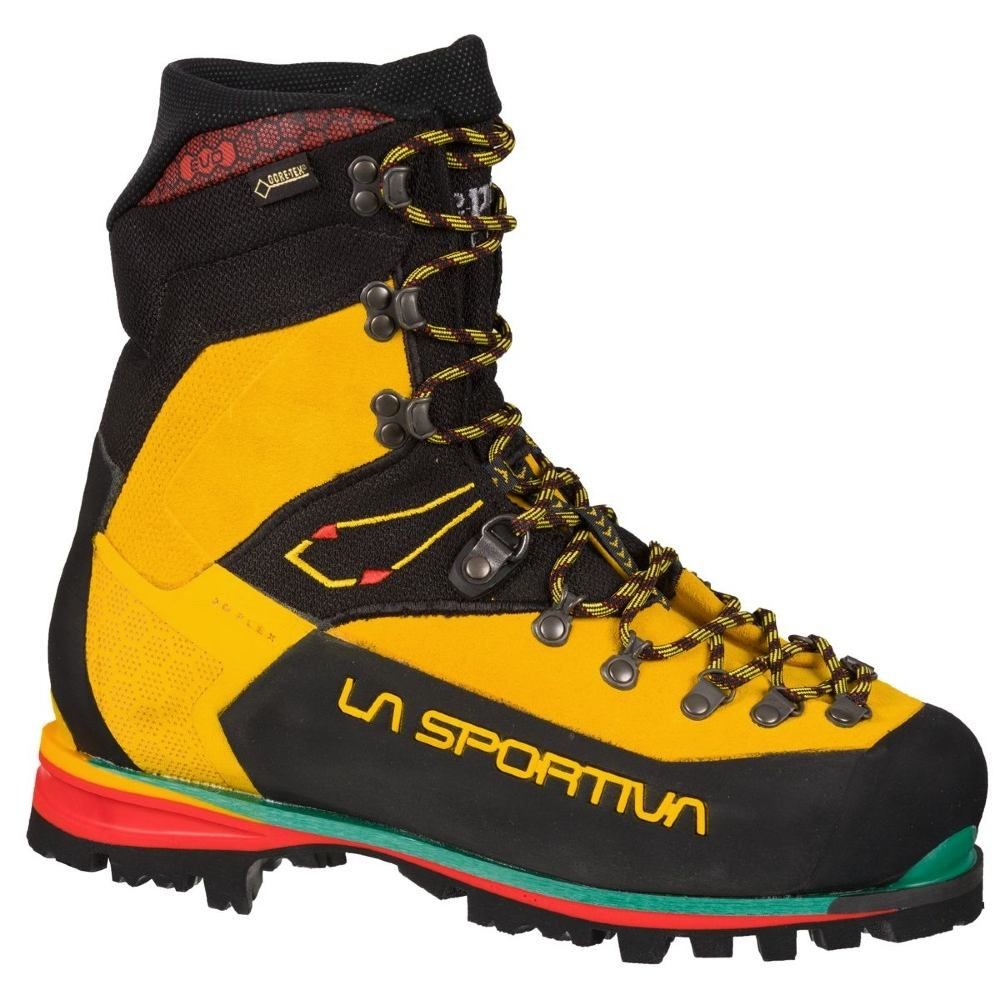
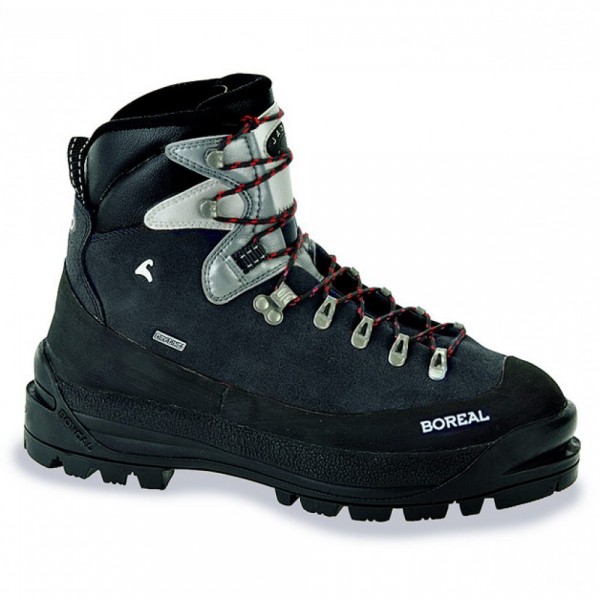
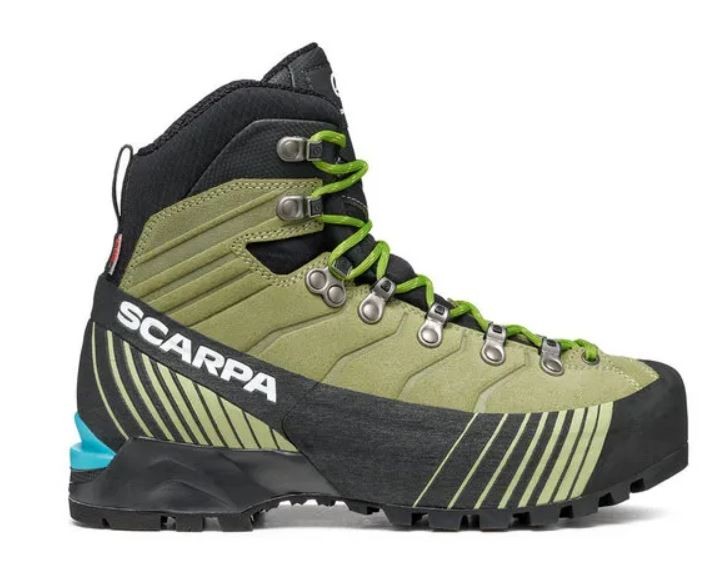
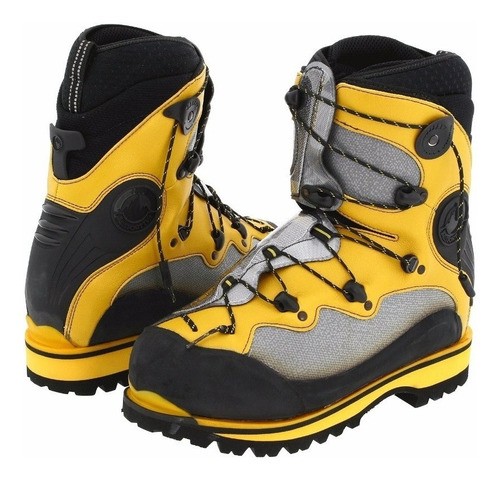
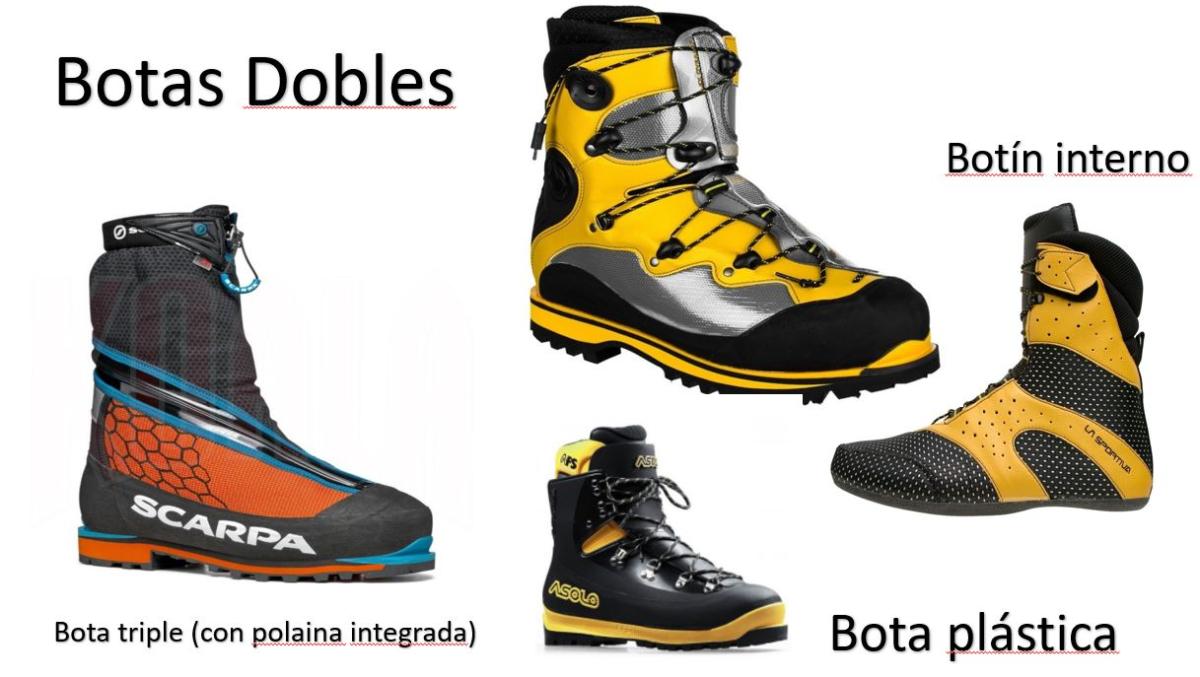
Type 4 – Winter Ascents and/or Mountains Over 6000 m (Double Boots).
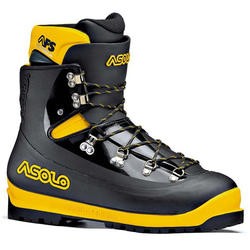
This is the boot used exclusively for winter mountaineering and high-altitude ascents: mountains above 6000 masl, mountains with prolonged time on snow and glaciers. It's called a "double" boot because, in addition to the outer shell, it has a removable inner liner. The outer shell can be plastic (which is starting to fall out of use) or synthetic.