Trekking & mountaineering
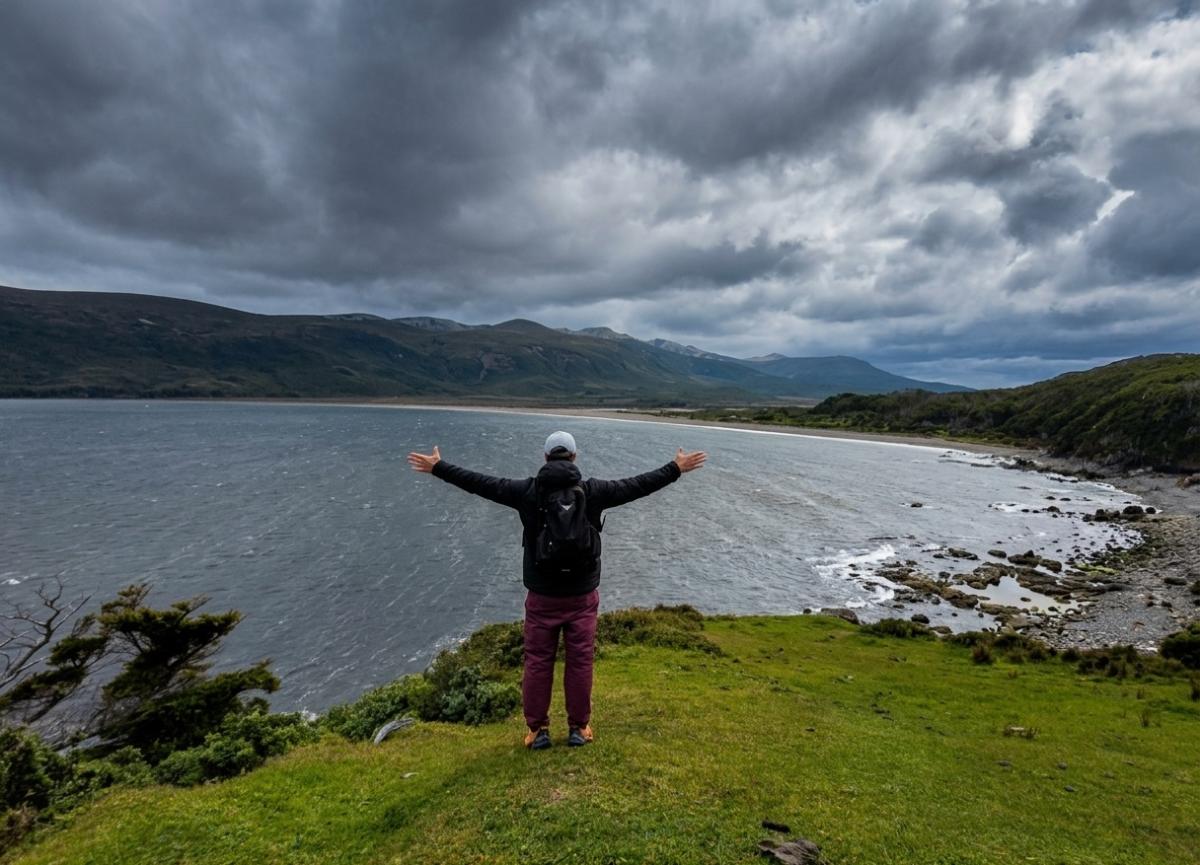
Peninsula Mitre - The end of the world in its purest state
an adventure on foot and by sailboat through the ultimate end of the Earth
Adventure in the Sierras de los Comechingones
Between admirable nature and a rich history:
The so-called "Pueblo Escondido" (Hidden Village) is located at 2,006 m.a.s.l. (meters above sea level), on the Córdoba-San Luis interprovincial border, 95 kilometers south of Villa General Belgrano and 30 km east of Merlo, San Luis. This wild spot sits right in the middle of the Sierras de los Comechingones, or Sierras Grandes, a bit further south and in the same range that holds other famous sierra and mountain destinations such as Los Gigantes or Cerro Champaquí itself.
In the surrounding area there are notable natural attractions such as the river's swimming holes, the tunnels of Cerro Aspero, and the Salto del Tigre, a waterfall over 25 meters high that ends in another large swimming hole.
In the past, a colony operated here where 300 workers lived, engaged in extracting wolframite. Between 1910 and 1920 the Germans transported the ore to San Luis on mule-back; some witnesses claim to have seen trains of more than 50 mules.
In 1930 an English company opened a trail from La Cruz to the mountain and built an impressive infrastructure for the time, which, among other technological advances, included its own liquid-fuel power plant, imported from Europe.
In the 1940s this place had its heyday, when wolfram and tungsten ore were extracted from the mine – materials used today in manufacturing iron-alloy tools and lamp filaments. After World War II ended, mining activity began to decline, and the international price of the ore was poor. The plant finally closed in 1969.
In short, Pueblo Escondido is a group of buildings ranging from the old power plant, which generated electricity by means of generator sets, to staff quarters, a dining hall, and managers' houses, among others. The name Pueblo Escondido ("Hidden Village") comes from the fact that the place sits nestled between Cerro Áspero and other mountains that form a large ravine.
What we present here is the planned route for the trek, but the exact route, the duration of each walking stage, and the choice of alternative itineraries are subject to various factors such as weather conditions and the guides' group assessment.
Day 1: Meeting in Merlo, San Luis. Introduction of guides and the work group; preparations and packing of backpacks.
We travel by vehicle to the base of the sierras. Gear preparation, then we head out to walk up the slope. The climb is steady and tiring, but the views begin to be extraordinary, over the whole valley. Lunch on the way. We pass a cross, a scenic viewpoint, and continue climbing to the provincial border. We look for a campsite and set it up, next to a stream. Afternoon snack with mate. Talk on safety, hygiene, the environment, and camp living rules. Then at dusk we walk up to the summit of Cerro de las Ovejas, the highest point in San Luis province. Return to camp, dinner, and overnight stay.
Day 2: Breakfast, very early. We get ready to break camp and continue the hike, now across the upper plains of the sierras. Today, the trek will take us to Pueblo Escondido, a group of buildings that housed 20th-century miners when working with tungsten (for light bulbs) was significant. On arrival we settle into the rooms of the Pueblo Escondido refuge. Lunch.
We then split into two large groups to carry out two major activities:
1) Orientation workshop (working with topographic charts, maps, compasses, and GPS, on a 2-hour walk)
2) Zip-line (crossing the riverbed on a rope, with harnesses, helmet, and pulleys). Mid-afternoon snack.
Talk on first aid and rescue in backcountry areas.
We head out to explore the surroundings of the village, its hanging bridge, and the facilities. Some free time to look around. Dinner. The plan is a night ascent of Cerro Áspero, over 2,100 m, a wonderful experience. Return and overnight stay.
Day 3: Breakfast. Breaking down camp. The trail will take us to the great Salto del Tigre, a waterfall more than 50 m high. We will stay there to enjoy the spot, and for the most adventurous enthusiasts we will offer a rope descent next to the waterfall (rappelling). Lunch. We continue hiking to the upper sierra road, where a vehicle will pick us up to head down to Merlo and the bus terminal. End of the program.
Format: Multi-day trekking program (approach and main trek) + multi-adventure activities.
Difficulty: moderate.
From age 10.
There are dormitories in the old buildings of the village, with mattresses, where you need to use a sleeping bag
Yes, there is a large room with tables and benches for gathering at breakfast, lunch, afternoon snack, and dinner
It's about 7 km along a secondary vehicle road, on foot; and then about 5 km more along a mountain trail with ups and downs. Roughly 4 hours, with a lunch stop in the middle, both on the way there and back.
We have a satellite phone in order to request a vehicle at the nearest outpost, and transport whoever needs it on horseback.
We have everyone take part in community activities, so they also learn about mountain cooking.
Breakfasts and afternoon snacks: mate cocido, chocolate milk, tea, juices, bread, jams, dulce de leche, crackers, sweet bread, puddings, etc.
Lunches: empanadas, cold-cut or full milanesa sandwiches, for meals on the move; burgers, sausages with mashed potatoes, pasta for the lunches taken at a stable location.
Dinners: chicken with rice, hearty stews, pasta with various sauces.
Scale 0–100%. Argentina Extrema graded difficulty system. How it is measured


We will reply by email or WhatsApp with full details, payment options and how to confirm.
Trekking & mountaineering
an adventure on foot and by sailboat through the ultimate end of the Earth
Trekking & mountaineering
The story of the plane that crashed on Cerro El Sosneado carrying thoroughbred horses, jewelry and a lot of m…
Trekking & mountaineering
Are you looking for new experiences and challenges that will energize your routine?

